 ChipApex | Global Electronic Components Supplier
SEARCH
Search Product
Search Post
— IC芯片 | 连接器 | 传感器 | 被动器件 —
Search productSearch post
— IC芯片 | 连接器 | 传感器 | 被动器件 —
Consult the customer manager about the wholesale price.
consultation hotline:86-132-6715-2157
email:[email protected]
Contact the product manager for consultation. One-stop consultation is available.
Do you want a lower wholesale price? Please send us your inquiry and we will reply immediately.
The MRF586G is a silicon RF power transistor manufactured by Microsemi Corporation, designed for high-performance applications in the ultra-high frequency range. It operates within a frequency band of 470 MHz to 960 MHz and delivers significant output power capabilities suitable for demanding RF environments. The component utilizes a robust surface-mount package configuration to facilitate integration into compact circuit designs. Key electrical characteristics include a drain voltage rating that supports high-power operation and a gain profile optimized for efficiency across its specified bandwidth. This device is engineered to provide reliable performance in linear and switching modes, making it a versatile solution for broadband amplification tasks where stability and power density are critical requirements.
Verify the manufacturer designation carefully as Microsemi's semiconductor assets were acquired by Microchip Technology. Ensure the specific suffix matches the required pinout and thermal specifications. Request the official datasheet to confirm current production status and compliance with relevant environmental standards before finalizing procurement plans.
Evaluate the thermal resistance characteristics against the intended heat sink design to ensure adequate dissipation at maximum power levels. Confirm that the biasing network supports the required drain voltage and current specifications for the target application. Consider the impedance matching requirements across the full operating bandwidth to maintain optimal gain and efficiency performance.
This component belongs to the family of silicon RF power transistors used in high-frequency amplification stages. It serves as a critical active element in transmitter chains where wideband coverage and high linearity are necessary. The device complements other discrete RF solutions by offering a balance of power output and bandwidth flexibility for various industrial and communications sectors.
Direct replacements may be limited due to specific pin configurations and thermal footprints. Evaluate alternative devices from Microchip or other manufacturers with similar frequency ranges and power ratings, ensuring compatibility with existing board layouts and biasing circuits.
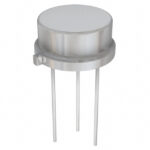 MRF586G
The activity of extra discounts on wholesale prices is in full swing…
Please fill in your contact information and we will send you the latest wholesale price list.





