 ChipApex | Global Electronic Components Supplier
SEARCH
Search Product
Search Post
— IC芯片 | 连接器 | 传感器 | 被动器件 —
Search productSearch post
— IC芯片 | 连接器 | 传感器 | 被动器件 —
Consult the customer manager about the wholesale price.
consultation hotline:86-132-6715-2157
email:[email protected]
Contact the product manager for consultation. One-stop consultation is available.
Do you want a lower wholesale price? Please send us your inquiry and we will reply immediately.
The MSC2X100SDA070J is a Silicon Carbide Schottky Barrier Diode module manufactured by Microchip Technology. It features a dual anti-parallel configuration housed in a SOT-227 (miniBLOC) package with chassis mounting capability. The device supports a maximum repetitive peak reverse voltage of 700 V and a continuous forward current of 100 A per diode. It operates within a junction temperature range up to +175 °C, providing robust performance for high-power applications requiring low switching losses and high thermal efficiency.
Verify the specific ordering suffix and package variant against the official Microchip datasheet to ensure compatibility with your thermal management design. Confirm that the chassis mounting interface matches your system requirements. Cross-reference the part number with authorized distributors to validate authenticity and avoid counterfeit components. Ensure storage conditions align with semiconductor handling standards prior to assembly.
Select this component when designing systems requiring high-frequency operation with minimal switching losses. The SiC material choice reduces cooling requirements compared to silicon alternatives. Evaluate the thermal resistance characteristics of the SOT-227 package against your heatsink solution. Consider the 700 V rating as a margin for transient voltages in medium-voltage industrial environments.
This module belongs to Microchip's MSC series of Silicon Carbide diode modules, designed for high-power density applications. The series offers various voltage and current ratings to suit different power levels. The MSC2X100SDA070J specifically targets applications needing dual-diode configurations in a compact, thermally efficient footprint, bridging the gap between discrete components and larger modular solutions.
Direct substitutes may include other 700V 100A dual SiC diodes in SOT-227 packages from manufacturers like Wolfspeed or ROHM. Verify pinout compatibility and thermal resistance values before substitution. Ensure the alternative device meets the same junction temperature and reverse voltage specifications for equivalent performance.
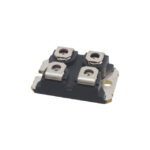 MSC2X100SDA070J
The activity of extra discounts on wholesale prices is in full swing…
Please fill in your contact information and we will send you the latest wholesale price list.





