ChipApex | Global Electronic Components Supplier
SEARCH
Search Product
Search Post
— IC芯片 | 连接器 | 传感器 | 被动器件 —
Search productSearch post
— IC芯片 | 连接器 | 传感器 | 被动器件 —
Consult the customer manager about the wholesale price.
consultation hotline:86-132-6715-2157
email:[email protected]
Contact the product manager for consultation. One-stop consultation is available.
Do you want a lower wholesale price? Please send us your inquiry and we will reply immediately.
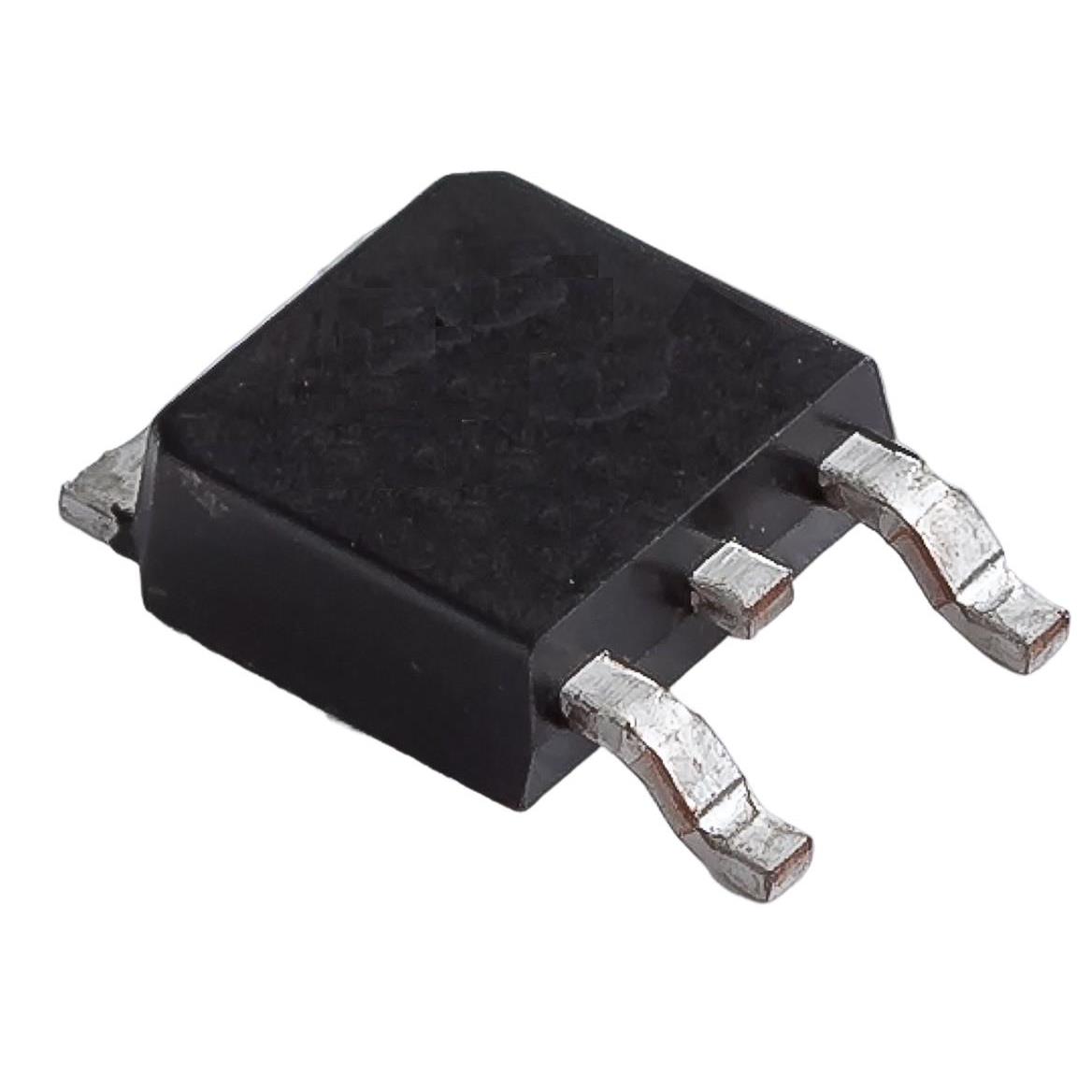
The MSD100P50 is a P-Channel MOSFET utilizing trench DMOS technology, designed for high efficiency and fast switching. It features a Drain-Source Voltage (VDS) of -100 V and a continuous drain current (ID) of -30 A at 25°C. The device guarantees an on-resistance (RDS(on)) of 50 mΩ at VGS = -10 V and supports a pulsed drain current (IDM) of -100 A. Single pulse avalanche energy (EAS) is rated at 345 mJ with L=0.1mH. Operating junction temperature ranges from -55 to +150 °C, with thermal resistance RθJA at 62 °C/W.
Verify the specific datasheet revision against the manufacturer's official documentation before implementation. Confirm that the TO-252 package dimensions align with your PCB footprint requirements. Ensure thermal management solutions account for the specified junction-to-ambient thermal resistance under your operating conditions. Validate that voltage and current ratings meet the peak demands of your circuit design.
Select this component for applications requiring efficient power switching with moderate voltage handling capabilities. The low on-resistance contributes to reduced conduction losses, improving overall system efficiency. Consider the thermal characteristics when designing heat dissipation strategies, particularly for continuous high-current operations. Verify compatibility with gate drive voltages to ensure optimal threshold activation.
This component belongs to the family of P-Channel MOSFETs manufactured by Bruckewell Technology Corporation. It utilizes trench DMOS technology to achieve superior switching performance and withstand high energy pulses. The device is specifically tailored for high-efficiency applications where fast switching and low on-resistance are critical parameters.
No public confirmed substitute part numbers are available in the provided documentation.
The MSD100P50 has a single pulse avalanche energy rating of 345 mJ when tested with an inductance of 0.1 mH.
The normalized on-resistance increases as the junction temperature rises, as illustrated in the typical electrical characteristics graphs provided in the datasheet.
 MSD100P50
The activity of extra discounts on wholesale prices is in full swing…
Please fill in your contact information and we will send you the latest wholesale price list.