ChipApex | Global Electronic Components Supplier

SEARCH
Search Product
Search Post
— IC芯片 | 连接器 | 传感器 | 被动器件 —
Search productSearch post
— IC芯片 | 连接器 | 传感器 | 被动器件 —
Consult the customer manager about the wholesale price.
consultation hotline:86-132-6715-2157
email:[email protected]
Contact the product manager for consultation. One-stop consultation is available.
Do you want a lower wholesale price? Please send us your inquiry and we will reply immediately.
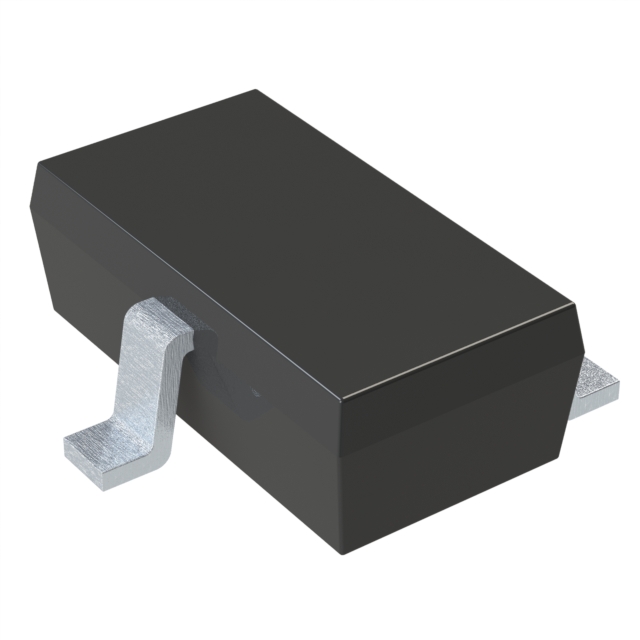
The MUN2111T3G is a PNP Bias Resistor Transistor (BRT) from onsemi, integrating a single transistor with a monolithic bias network consisting of a series base resistor and a base-emitter resistor. This configuration replaces discrete components to reduce board space and system cost. The device features a collector-emitter voltage (VCEO) of 50 Vdc and a continuous collector current (IC) of 100 mAdc. It operates within a junction temperature range of -55°C to +150°C. Electrical characteristics include a typical DC current gain (hFE) of 60 at IC = 5.0 mA and VCE = 10 V, and an input resistor ratio (R1/R2) of 1.0.
Verify the specific ordering suffix against the manufacturer's official documentation to confirm package type and shipping quantity. Ensure the requested variant matches the required automotive or standard qualification status, as prefixes such as NSV indicate unique site requirements. Confirm RoHS compliance and Pb-free status through the latest datasheet revision before finalizing procurement specifications.
Select this component when a PNP digital switch with integrated biasing is required in a surface-mount package. Compare thermal dissipation capabilities across available packages like SC-59 or SOT-23 based on the specific power load. Verify that the 50 V collector-emitter voltage rating exceeds the maximum operating voltage of the target application circuit.
The MUN2111T3G belongs to the DTA114E/D family of Digital Transistors (BRT). This series includes related part numbers such as MMUN2111L, MUN5111, and DTA114EE, which share similar electrical characteristics but differ in package style and pinout configurations. These devices are designed to function as direct replacements for discrete transistor-resistor networks in various consumer and industrial electronics.
Direct functional substitutes within the same family include MMUN2111LT3G (SOT-23 package) and MUN5111T3G (SC-70/SOT-323 package). Verify pin compatibility and thermal resistance differences when substituting between package types to ensure adequate heat dissipation in the final assembly.
 MUN2111T3G

The activity of extra discounts on wholesale prices is in full swing…
Please fill in your contact information and we will send you the latest wholesale price list.