ChipApex | Global Electronic Components Supplier

SEARCH
Search Product
Search Post
— IC芯片 | 连接器 | 传感器 | 被动器件 —
Search productSearch post
— IC芯片 | 连接器 | 传感器 | 被动器件 —
Consult the customer manager about the wholesale price.
consultation hotline:86-132-6715-2157
email:[email protected]
Contact the product manager for consultation. One-stop consultation is available.
Do you want a lower wholesale price? Please send us your inquiry and we will reply immediately.
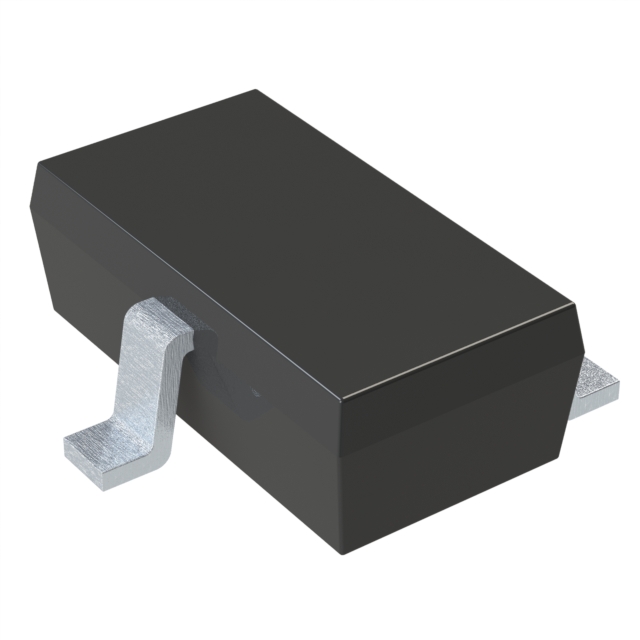
The MUN2211T3G is an NPN silicon Bias Resistor Transistor (BRT) from onsemi, housed in a surface-mount SC-59 package. It integrates a single transistor with a monolithic bias network consisting of two resistors: a series base resistor and a base-emitter resistor. Key electrical parameters include a collector-emitter voltage (VCEO) of 50 Vdc, a continuous collector current (IC) of 100 mAdc, and a total device power dissipation (PD) of 230 mW at 25°C. The typical input resistance (R1) is 10 kOhms, with a resistor ratio (R1/R2) of 1. The minimum DC current gain (hFE) is 35 at IC = 5.0 mA and VCE = 10 V.
Verify the specific ordering suffix against official documentation to confirm shipping quantities and packaging formats. Confirm RoHS compliance status and Pb-free availability through manufacturer datasheets. Ensure the SC-59 package dimensions align with PCB footprint requirements before finalizing procurement orders.
Select this component when circuit design requires simplification by reducing board space and component count. Verify that the 10 kOhm typical input resistance and 1:1 resistor ratio meet the specific biasing requirements. Ensure the 50 V collector-emitter voltage rating accommodates the maximum operating voltage of the application.
This part belongs to the MUN2211T1 Series of preferred devices manufactured by onsemi. The series includes various NPN BRTs with different integrated resistor values. The 'T3' suffix indicates a specific shipping quantity configuration compared to other series variants like 'T1'.
MUN2211T3G serves as the lead-free equivalent to the MUN2211T3. Both share identical electrical characteristics and pinouts within the SC-59 package. Verify marking codes and shipping specifications when substituting between these variants.
The device contains a monolithic bias network consisting of a series base resistor (R1) and a base-emitter resistor (R2).
The SC-59 package features modified gull-wing leads designed to absorb thermal stress during soldering, eliminating the possibility of damage to the die.
The component has an ESD rating of Class 1 for the Human Body Model and Class B for the Machine Model.
 MUN2211T3

The activity of extra discounts on wholesale prices is in full swing…
Please fill in your contact information and we will send you the latest wholesale price list.