 ChipApex | Global Electronic Components Supplier

SEARCH
Search Product
Search Post
— IC芯片 | 连接器 | 传感器 | 被动器件 —
Search productSearch post
— IC芯片 | 连接器 | 传感器 | 被动器件 —
Consult the customer manager about the wholesale price.
consultation hotline:86-132-6715-2157
email:[email protected]
Contact the product manager for consultation. One-stop consultation is available.
Do you want a lower wholesale price? Please send us your inquiry and we will reply immediately.
The MUN5135T1G is a Bipolar Digital Transistor (BRT) manufactured by onsemi, designed to replace discrete transistor and resistor networks. It integrates an NPN transistor with a monolithic bias network consisting of two resistors: a series base resistor and a base-emitter resistor. The device operates with a maximum collector-emitter voltage of 50 V and a continuous collector current of 100 mA. Key electrical parameters include a typical input resistance of 4.7 kOhms and a typical resistor ratio of 1. It is housed in the SC-74 (SOT-363) surface-mount package, supporting automated assembly. The component functions within a temperature range of -55°C to +150°C.
Verify the specific ordering suffix to ensure the correct packaging configuration matches production requirements. Confirm RoHS compliance status and lead times directly with authorized distributors or the manufacturer prior to procurement. Ensure storage conditions adhere to moisture sensitivity level specifications to maintain device reliability during assembly processes.
Select this component when a compact solution for NPN switching with fixed biasing is required. Verify that the 50 V collector-emitter voltage rating exceeds the maximum circuit voltage. Ensure the 100 mA continuous current capability meets load requirements. Compare the integrated 4.7 kOhm input resistance against existing discrete designs to confirm compatibility with drive source capabilities.
This part belongs to the MUN series of Bias Resistor Transistors from onsemi. These devices are engineered to streamline digital circuit layouts by combining active and passive elements. The series supports various configurations and packages, offering designers flexibility in managing board space and assembly complexity while maintaining standardized electrical performance across different operating conditions.
Compatible substitutes include other BRTs with matching NPN polarity, similar voltage ratings, and comparable resistor values. Verify pinout compatibility for direct replacement in SOT-363 footprints. Ensure thermal dissipation characteristics align with the application's power constraints.
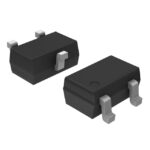 MUN5135T1G

The activity of extra discounts on wholesale prices is in full swing…
Please fill in your contact information and we will send you the latest wholesale price list.





