ChipApex | Global Electronic Components Supplier
SEARCH
Search Product
Search Post
— IC芯片 | 连接器 | 传感器 | 被动器件 —
Search productSearch post
— IC芯片 | 连接器 | 传感器 | 被动器件 —
Consult the customer manager about the wholesale price.
consultation hotline:86-132-6715-2157
email:[email protected]
Contact the product manager for consultation. One-stop consultation is available.
Do you want a lower wholesale price? Please send us your inquiry and we will reply immediately.
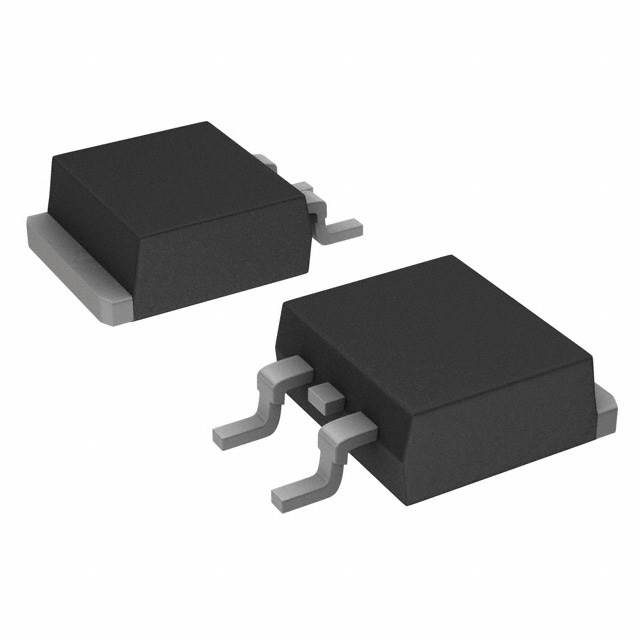
The MURB1620CTT4G is an ultrafast recovery rectifier manufactured by onsemi, housed in a D2PAK-3 (TO-263-3) surface-mount package. It features a dual common cathode configuration with a maximum repetitive reverse voltage of 200 V and an average forward current rating of 16 A per diode. The device exhibits a typical forward voltage of 975 mV at rated current and a maximum reverse leakage current of 5 uA. Key electrical characteristics include a peak non-repetitive surge current capability of 100 A and a fast reverse recovery time of 35 ns. The component operates within a junction temperature range of -65 °C to +175 °C.
Verify the specific suffix T4G confirms lead-free and RoHS compliance status against the latest manufacturer documentation. Confirm the D2PAK-3 package dimensions match your PCB footprint requirements. Ensure the dual common cathode topology aligns with your circuit design rather than common anode variants. Check for any recent product change notices that may affect pinout or material composition.
Select this component when high-speed switching efficiency is required alongside moderate current handling capabilities. The 200 V rating suits low-voltage DC bus applications. Consider the thermal resistance of the D2PAK package for heat dissipation needs. Compare the 35 ns recovery time against slower alternatives if minimizing switching losses is critical. Verify compatibility with your operating frequency constraints.
This part belongs to the MURB1620CT series of silicon rectifiers designed for general-purpose ultrafast recovery applications. It shares the same electrical specifications as the through-hole MURB1620CTRG variant but utilizes a surface-mount package for automated assembly. The series targets cost-sensitive designs requiring reliable performance in compact power supplies.
MURB1620CTRT4G offers identical electrical parameters but uses a common anode configuration instead of common cathode. MURB1660CTT4G provides similar packaging but higher voltage ratings. Verify pinout compatibility before substituting common anode parts into common cathode designs.
 MURB1620CTT4G
The activity of extra discounts on wholesale prices is in full swing…
Please fill in your contact information and we will send you the latest wholesale price list.