ChipApex | Global Electronic Components Supplier
SEARCH
Search Product
Search Post
— IC芯片 | 连接器 | 传感器 | 被动器件 —
Search productSearch post
— IC芯片 | 连接器 | 传感器 | 被动器件 —
Consult the customer manager about the wholesale price.
consultation hotline:86-132-6715-2157
email:[email protected]
Contact the product manager for consultation. One-stop consultation is available.
Do you want a lower wholesale price? Please send us your inquiry and we will reply immediately.
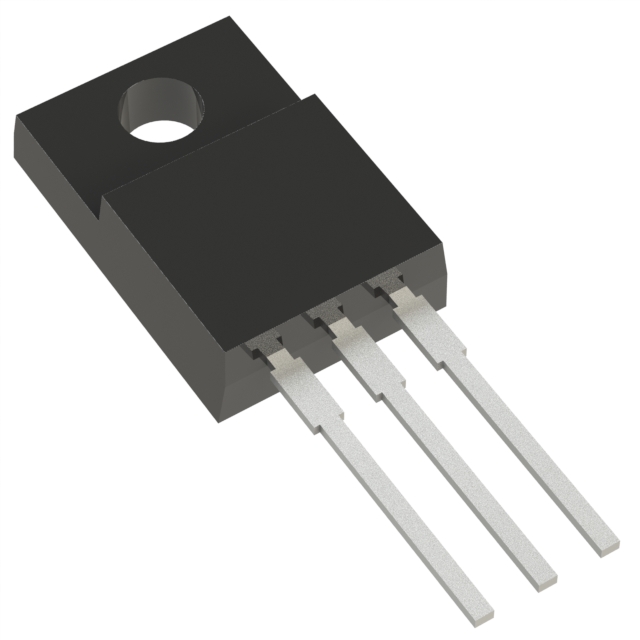
The MURF2060CT is a superfast efficient rectifier diode manufactured by Diotec Semiconductor. It features a dual common cathode configuration with an average forward current rating of 2x 10 A and a maximum repetitive peak reverse voltage of 600 V. The device exhibits a typical forward voltage of 1.25 V at 10 A and a junction-to-case thermal resistance of 6.0 K/W. Reverse recovery times are specified as less than 25 ns at 25°C and less than 50 ns at 150°C. Peak forward surge currents reach 90 A or 100 A depending on frequency, and the component supports a maximum junction temperature of 175°C.
Verify the specific datasheet version and revision date directly from Diotec Semiconductor before design finalization. Confirm compliance requirements such as RoHS and ELV status against current regulatory standards. Ensure that thermal management designs account for the specified junction-to-case thermal resistance under actual operating conditions. Validate that the selected package mounting method aligns with the mechanical data provided in the official documentation.
Select this component when circuit designs require fast recovery speeds combined with high current handling capabilities. The 600 V reverse voltage rating makes it suitable for mains-derived power stages. Consider the 175°C junction temperature limit for environments requiring elevated thermal margins. Evaluate the dual common cathode topology to determine if it simplifies board layout compared to discrete single-diode solutions.
This component belongs to the MURF series of superfast rectifiers produced by Diotec Semiconductor. The series utilizes silicon planar technology optimized for low reverse recovery charge. It is housed in a TO-220AB package, which facilitates through-hole mounting and effective heat dissipation to the PCB or heatsink. The product line targets general industrial and commercial power conversion markets.
Cross-reference with other manufacturers' MURF2060 equivalents or generic 20A 600V superfast rectifiers. Verify that substitute parts match the reverse recovery time specifications and forward voltage characteristics to maintain circuit performance. Check pinout compatibility and thermal resistance values to ensure direct replacement feasibility without redesigning the cooling infrastructure.
 MURF2060CT
The activity of extra discounts on wholesale prices is in full swing…
Please fill in your contact information and we will send you the latest wholesale price list.