ChipApex | Global Electronic Components Supplier
SEARCH
Search Product
Search Post
— IC芯片 | 连接器 | 传感器 | 被动器件 —
Search productSearch post
— IC芯片 | 连接器 | 传感器 | 被动器件 —
Consult the customer manager about the wholesale price.
consultation hotline:86-132-6715-2157
email:[email protected]
Contact the product manager for consultation. One-stop consultation is available.
Do you want a lower wholesale price? Please send us your inquiry and we will reply immediately.
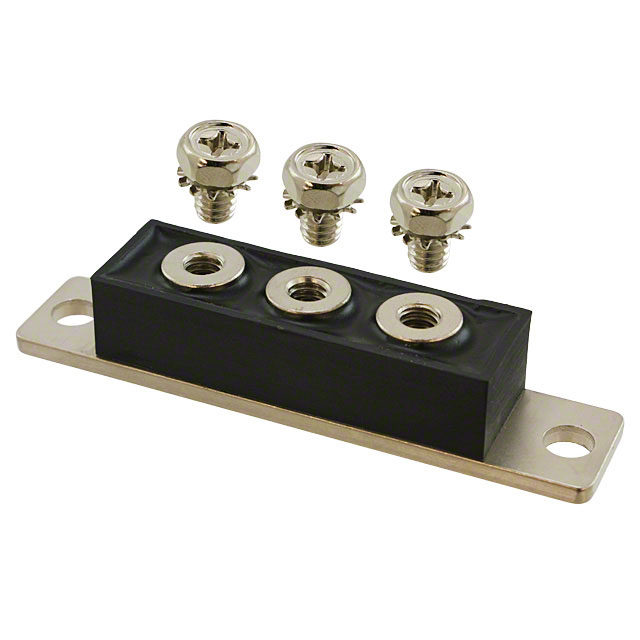
The GeneSiC Semiconductor MURT20010 is a silicon super fast recovery diode module rated for a repetitive peak reverse voltage of 100 V and an average forward current of 200 A per package. It features a three-tower isolation type package with an electrically isolated base plate. Key electrical parameters include a maximum instantaneous forward voltage of 1.0 V at 25°C, a maximum reverse recovery time of 75 ns, and a thermal resistance from junction to case of 0.45 °C/W per leg. The device supports an operating temperature range from -55°C to 150°C and can withstand a peak forward surge current of 2000 A.
Verify the specific suffix designation against the datasheet to confirm terminal configuration, as 'R' variants feature reversed leads. Ensure the selected part matches the required voltage rating of 100 V and current capacity of 200 A. Confirm thermal management requirements align with the specified junction-to-case thermal resistance for your application environment.
Select this component when high-speed switching and electrical isolation are critical. The 75 ns reverse recovery time makes it suitable for applications where minimizing switching losses is essential. Consider the three-tower package geometry for board space constraints and verify that the 100 V reverse voltage rating provides adequate margin for your circuit's peak inverse voltage conditions.
This module belongs to the MURT20005 through MURT20020R series of silicon super fast recovery diodes. The series offers varying voltage ratings from 50 V to 200 V while maintaining a consistent 200 A current handling capability. The MURT20010 specifically targets the 100 V segment of this lineup, sharing identical thermal and physical characteristics with its siblings.
Direct replacements must match the 100 V rating, 200 A current capacity, and 75 ns recovery time. Verify pinout compatibility, particularly regarding the standard versus reversed lead configurations found in the 'R' suffix variants. Ensure the replacement package maintains the same thermal resistance and isolation requirements.
 MURT20010
The activity of extra discounts on wholesale prices is in full swing…
Please fill in your contact information and we will send you the latest wholesale price list.