 ChipApex | Global Electronic Components Supplier
SEARCH
Search Product
Search Post
— IC芯片 | 连接器 | 传感器 | 被动器件 —
Search productSearch post
— IC芯片 | 连接器 | 传感器 | 被动器件 —
Consult the customer manager about the wholesale price.
consultation hotline:86-132-6715-2157
email:[email protected]
Contact the product manager for consultation. One-stop consultation is available.
Do you want a lower wholesale price? Please send us your inquiry and we will reply immediately.
The MV2N4093 is a single N-channel Junction Field-Effect Transistor (JFET) manufactured by Microchip Technology. It utilizes silicon technology and is housed in a TO-18-3 metal can package designed for through-hole mounting. The device features a drain-source breakdown voltage of 40 V and a gate-source breakdown voltage of -40 V. Key electrical characteristics include a zero-gate-voltage drain current of 8 mA, a continuous drain current rating of 100 pA, and an on-resistance of 80 Ohms. Power dissipation is rated at 360 mW, with an operating temperature range spanning from -65 C to +175 C.
Verify component authenticity through authorized Microchip Technology distributors or direct manufacturer channels. Confirm the specific lot code and date code against project requirements. Ensure proper handling procedures are followed due to the through-hole metal can packaging. Request official datasheets and compliance documentation prior to final procurement decisions to ensure technical suitability.
Select the MV2N4093 when a specific 8 mA zero-gate-voltage drain current is required within a 40 V breakdown voltage limit. Consider this part for designs necessitating operation up to 175 C where standard plastic packages may fail. Compare against the MV2N4091 and MX2N4092 variants if different transconductance levels or current specifications better match the circuit design goals.
This component belongs to the Microchip Technology line of discrete JFETs, specifically designed for robust performance in demanding electronic environments. The TO-18-3 package provides mechanical stability and thermal conductivity advantages over smaller surface-mount alternatives. It serves as a specialized active element for linear applications where precise control of channel conductivity is essential for signal integrity.
The MV2N4091 offers a higher drain current of 30 mA, while the MX2N4092 provides 15 mA. Both share identical voltage ratings and package types. Verify that the alternative current specifications align with the original circuit biasing requirements before substitution.
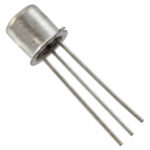 MV2N4093
The activity of extra discounts on wholesale prices is in full swing…
Please fill in your contact information and we will send you the latest wholesale price list.




