ChipApex | Global Electronic Components Supplier

SEARCH
Search Product
Search Post
— IC芯片 | 连接器 | 传感器 | 被动器件 —
Search productSearch post
— IC芯片 | 连接器 | 传感器 | 被动器件 —
Consult the customer manager about the wholesale price.
consultation hotline:86-132-6715-2157
email:[email protected]
Contact the product manager for consultation. One-stop consultation is available.
Do you want a lower wholesale price? Please send us your inquiry and we will reply immediately.
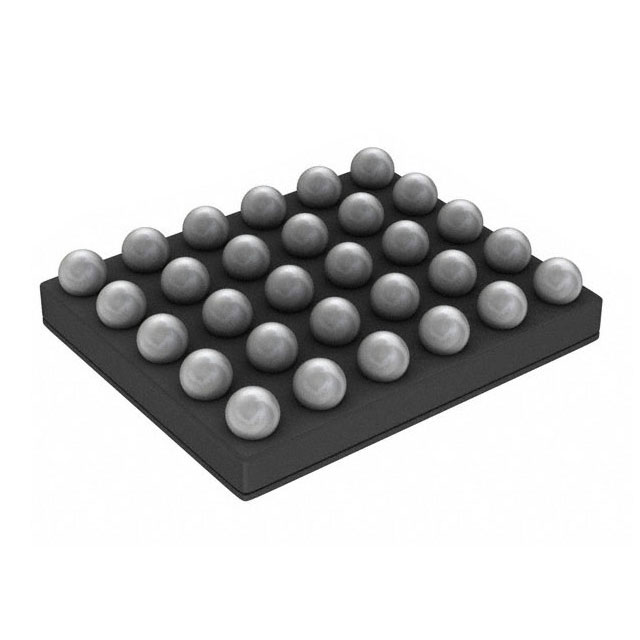
The NCA-ONA10IVUCX is a digital input, mono Class-D audio amplifier with integrated speaker voltage and current sensing. It operates from a PVDD supply of 5.5 V to 14 V and a DVDD supply of 1.62 V to 1.98 V. The device delivers up to 16 W into a 4 Ω load at 14 V supply with 1% THD+N. It supports I2S, TDM, and PDM digital audio interfaces with sampling rates from 16 kHz to 96 kHz. The package is a 30-bump WLCSP measuring 2.31 mm x 2.89 mm.
Verify the complete part number NCA-ONA10IVUCX against official onsemi documentation to ensure correct suffix identification. Confirm that the WLCSP30 package and tape & reel shipping format match project requirements. Cross-reference electrical specifications with the latest datasheet revision to account for any parameter updates.
Select this component for applications requiring high-efficiency digital audio amplification with built-in diagnostic capabilities. Ensure the host system supports the required digital audio formats (I2S, TDM, or PDM) and provides appropriate power rails. Consider the thermal performance and board layout constraints associated with the small WLCSP package when designing the PCB.
This device belongs to the ONA10IV family of digital audio amplifiers manufactured by onsemi. It is designed as an endpoint solution that combines amplification with speaker monitoring functions. The product line targets portable electronics where space efficiency and audio quality are critical priorities.
Direct substitutes are not explicitly listed in the provided documentation. Verify compatibility with existing designs by comparing pin configurations, electrical characteristics, and interface protocols with alternative Class-D amplifiers offering similar power output and sensing features.
The device supports Pulse Code Modulation (PCM) formats including I2S, Left Justified, and Time Division Multiplexing (TDM), as well as Pulse Density Modulation (PDM).
It features a fast automatic gain control (AGC) that reacts within microseconds to reduce gain during voltage drops, protecting the speaker and maintaining audio integrity.
Yes, up to eight devices can share digital audio interfaces and use a dedicated MAGC bus to synchronize gain adjustments across multiple instantiations.
 NCA-ONA10IVUCX

The activity of extra discounts on wholesale prices is in full swing…
Please fill in your contact information and we will send you the latest wholesale price list.