ChipApex | Global Electronic Components Supplier

SEARCH
Search Product
Search Post
— IC芯片 | 连接器 | 传感器 | 被动器件 —
Search productSearch post
— IC芯片 | 连接器 | 传感器 | 被动器件 —
Consult the customer manager about the wholesale price.
consultation hotline:86-132-6715-2157
email:[email protected]
Contact the product manager for consultation. One-stop consultation is available.
Do you want a lower wholesale price? Please send us your inquiry and we will reply immediately.
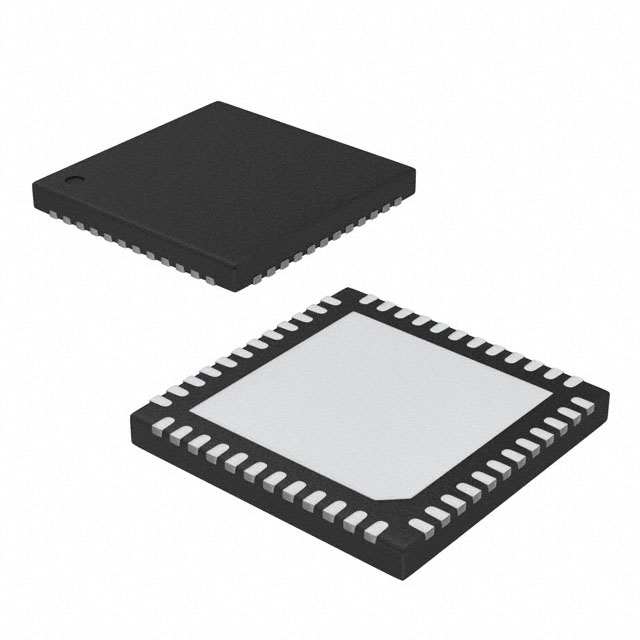
The NCL31001MNSTWG is an intelligent LED driver IC from onsemi, designed for high-performance lighting applications. It features a buck topology with a single output capable of delivering up to 3 A. The device operates within an input voltage range of 21.5 V to 57 V and supports an output voltage range of 4 V to 38 V. Switching frequency is adjustable between 44.4 kHz and 1 MHz. It includes SPI serial interface communication, PWM dimming, and open LED protection. The component is housed in a QFN-48 package and functions reliably across temperatures from -40 °C to +125 °C.
Verify the specific suffix MNSTWG to confirm the SPI interface variant, as other suffixes may indicate I2C compatibility. Confirm end-of-life status and discontinuation timelines prior to final design approval. Ensure ESD handling protocols are followed due to moisture sensitivity classification. Validate that the QFN-48 thermal pad requirements match the target PCB layout specifications.
Select this model when SPI communication is required for system integration rather than I2C. Choose based on the need for integrated power metrology and diagnostic capabilities alongside high linearity dimming. Consider the 3 A output current limit and 57 V maximum input voltage when sizing the external components. Verify compatibility with Arduino shield form factors if rapid prototyping is intended using associated evaluation boards.
This component belongs to the NCL310xx family of intelligent LED drivers targeting luminaire applications. It integrates a high-efficiency buck LED driver with auxiliary power stages. The family is designed for applications requiring precise dimming, diagnostics, and communication capabilities such as VLC or indoor positioning. It serves as a comprehensive solution for modern smart lighting infrastructure.
NCL31000MNSTWG offers identical electrical characteristics but utilizes an SPI interface instead of the I2C interface found in the MNITWG variant. Designers must verify pinout compatibility and software configuration differences when substituting between SPI and I2C variants within the same package.
 NCL31001MNSTWG

The activity of extra discounts on wholesale prices is in full swing…
Please fill in your contact information and we will send you the latest wholesale price list.