 ChipApex | Global Electronic Components Supplier

SEARCH
Search Product
Search Post
— IC芯片 | 连接器 | 传感器 | 被动器件 —
Search productSearch post
— IC芯片 | 连接器 | 传感器 | 被动器件 —
Consult the customer manager about the wholesale price.
consultation hotline:86-132-6715-2157
email:[email protected]
Contact the product manager for consultation. One-stop consultation is available.
Do you want a lower wholesale price? Please send us your inquiry and we will reply immediately.
The NCS8353MNTXG is a stereo Class D audio power amplifier from onsemi, packaged in QFN-32. It delivers up to 20 W per channel into an 8 Ω bridge-tied load (BTL) when powered by a 24 V rail. The device operates within an 8 V to 26 V supply range and achieves high efficiency of approximately 86%. Key programmable features include selectable gain settings of 20 dB, 26 dB, 32 dB, or 36 dB via G0/G1 pins, and a digital power limiter adjustable to 10 W, 12 W, 15 W, or 20 W per channel via PL0/PL1 pins. Shutdown quiescent current is typically 100 µA.
Verify the ordering suffix MNTXG corresponds to the QFN-32 package and tape & reel shipping configuration. Confirm that the component is Pb-Free as indicated by the marking diagram. Ensure the specific revision level matches system requirements, as electrical characteristics may vary between datasheet revisions.
Select this amplifier for applications requiring high efficiency without external heat sinks. Verify compatibility with the available power supply voltage range of 8 V to 26 V. Ensure the required gain setting and power limit configurations can be supported by the system's GPIO availability for the G0, G1, PL0, and PL1 control pins.
This component belongs to the NCS8353 family of stereo Class D audio amplifiers manufactured by onsemi. It is designed specifically for integration into flat panel television systems where space constraints and thermal management are critical. The device utilizes a fully differential architecture to improve noise immunity and signal integrity in noisy electronic environments.
Check for direct pin-compatible replacements within the same product family. Verify that any substitute maintains the same QFN-32 footprint and supports the required 24 V operating voltage. Ensure equivalent thermal performance and protection circuitry specifications are met.
The Digital Power Limiter is activated by setting the logic levels on the PL0 and PL1 input pins. The new limit takes effect after the device is disabled, the pins are set, and the device is re-enabled.
The FAULT pin asserts HIGH, and the output stage disables. The device enters a hiccup mode, attempting to re-enable every 180 ms until the short is removed.
If the junction temperature exceeds 160 °C, the output stage disables. It automatically re-enables when the temperature falls to 130 °C, providing 30 °C of thermal hysteresis.
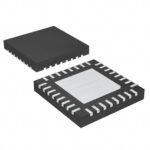 NCS8353MNTXG

The activity of extra discounts on wholesale prices is in full swing…
Please fill in your contact information and we will send you the latest wholesale price list.






