 ChipApex | Global Electronic Components Supplier

SEARCH
Search Product
Search Post
— IC芯片 | 连接器 | 传感器 | 被动器件 —
Search productSearch post
— IC芯片 | 连接器 | 传感器 | 被动器件 —
Consult the customer manager about the wholesale price.
consultation hotline:86-132-6715-2157
email:[email protected]
Contact the product manager for consultation. One-stop consultation is available.
Do you want a lower wholesale price? Please send us your inquiry and we will reply immediately.
The NLV27WZ14DFT2G is a dual Schmitt-trigger inverter from the LCX logic family, manufactured by onsemi. It operates within a supply voltage range of 1.65 V to 5.5 V and features two independent input channels with non-inverting buffer functionality adapted for inversion via Schmitt triggers. The device utilizes CMOS technology and is housed in an SC-88 (SOT-363) surface-mount package. Key electrical parameters include a maximum static current of 1 µA, output drive capabilities of ±32 mA, and propagation delays ranging from 4.9 ns at 5 V to higher values at lower voltages. It supports industrial temperature ranges from -55°C to +125°C.
Verify the specific suffix 'NLV' against official onsemi documentation to confirm it denotes a valid commercial variant distinct from the standard 'NL27WZ14'. Confirm RoHS compliance status and lead times directly with authorized distributors, as availability may vary. Ensure the SC-88 package footprint matches your PCB design constraints before ordering.
Select this component when Schmitt-trigger hysteresis is required to mitigate signal noise or oscillation during transition periods. It is suitable for designs needing robust inversion across a wide voltage spectrum. Compare propagation delay specifications against system timing requirements to ensure signal integrity is maintained at the target operating frequency.
This part belongs to the NL27WZ series of high-performance CMOS logic devices designed for low-voltage applications. The series includes buffers, drivers, and inverters optimized for portable electronics and battery-operated equipment where power conservation and signal reliability are critical. The LCX family represents a modern evolution of legacy logic standards with improved speed and lower power profiles.
The NL27WZ14DFT2G is functionally equivalent to the NL27WZ14DFT2G. Verify pinout compatibility and package dimensions (SC-88/SOT-363) when substituting. Check datasheets for any differences in electrical characteristics such as propagation delay or output current ratings between variants.
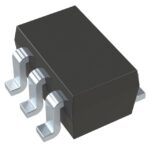 NLV27WZ14DFT2G

The activity of extra discounts on wholesale prices is in full swing…
Please fill in your contact information and we will send you the latest wholesale price list.





