ChipApex | Global Electronic Components Supplier

SEARCH
Search Product
Search Post
— IC芯片 | 连接器 | 传感器 | 被动器件 —
Search productSearch post
— IC芯片 | 连接器 | 传感器 | 被动器件 —
Consult the customer manager about the wholesale price.
consultation hotline:86-132-6715-2157
email:[email protected]
Contact the product manager for consultation. One-stop consultation is available.
Do you want a lower wholesale price? Please send us your inquiry and we will reply immediately.
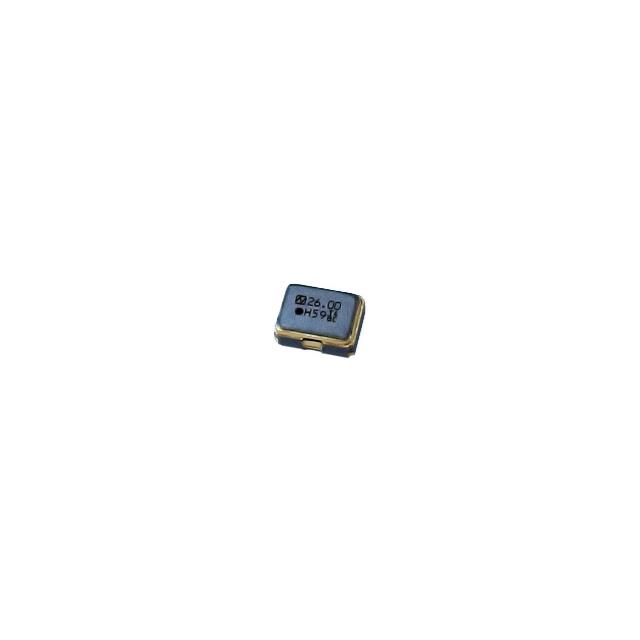
The NSC5021D-22.5792M is a CMOS standard crystal oscillator manufactured by NDK (NIHON DEMPA KOGYO CO., LTD). It operates at a nominal frequency of 22.5792 MHz and supports a 3.3V supply voltage with an integrated standby or power-down function. The device utilizes surface-mount technology in a small form factor package, designed for integration into digital circuits requiring precise clock signals. It is currently listed as an active product with a manufacturer standard lead time of 24 weeks.
Verify the specific operating voltage requirements against the target system design to ensure compatibility with the 3.3V specification. Confirm that the CMOS output levels align with the receiving logic family inputs. Check the latest datasheet for pin configuration details to prevent soldering errors during assembly. Ensure the selected packaging variant matches the automated placement equipment capabilities available in the manufacturing line.
Select this component when a low-power, surface-mount oscillator with standby control is required for 22.5792 MHz applications. Consider the CMOS interface for direct connection to digital processors without additional buffering. Evaluate the thermal performance and size constraints of the enclosure to accommodate the SMD footprint. Compare the standby current specifications against total system power budgets to verify efficiency gains from the power-down feature.
This part belongs to NDK's NSC series of standard crystal oscillators, which are engineered using synthetic quartz technology. The series focuses on providing reliable frequency stability in compact packages suitable for modern consumer electronics and industrial devices. NDK leverages its long-standing expertise in quartz component manufacturing to deliver consistent performance across this product line.
Consult official cross-reference lists for compatible alternatives. Verify electrical parameters such as frequency tolerance, load capacitance, and output drive strength before substitution. Ensure physical dimensions and pinout configurations match to maintain board compatibility.
 NSC5021D-22.5792M

The activity of extra discounts on wholesale prices is in full swing…
Please fill in your contact information and we will send you the latest wholesale price list.