ChipApex | Global Electronic Components Supplier

SEARCH
Search Product
Search Post
— IC芯片 | 连接器 | 传感器 | 被动器件 —
Search productSearch post
— IC芯片 | 连接器 | 传感器 | 被动器件 —
Consult the customer manager about the wholesale price.
consultation hotline:86-132-6715-2157
email:[email protected]
Contact the product manager for consultation. One-stop consultation is available.
Do you want a lower wholesale price? Please send us your inquiry and we will reply immediately.
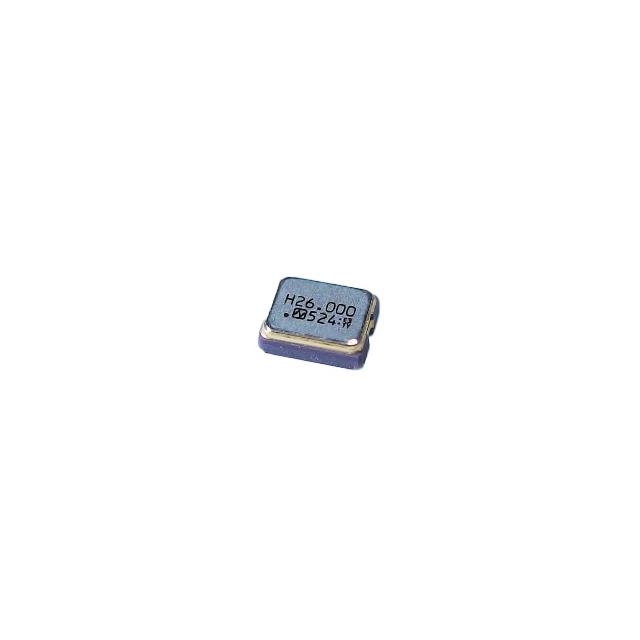
The NSC5338D-80M is a CMOS standard crystal oscillator manufactured by NDK. It operates at a nominal frequency of 80 MHz with a supply voltage of 3.3V. The device features a standby function for power management and supports a frequency stability of ±50 ppm. Designed for surface mount applications, it utilizes a compact 4-SMD, no lead package measuring 5.0mm x 3.2mm x 1.2mm. The component functions within an industrial temperature range of -40°C to +85°C and draws a maximum operating current of 25mA.
Verify the specific frequency tolerance and load capacitance requirements against your circuit design before procurement. Confirm that the 3.3V supply rail matches the oscillator's rated voltage. Ensure the selected package variant aligns with your PCB footprint specifications. Check for any recent lifecycle status updates from the manufacturer to avoid obsolescence risks during production runs.
Select this component when a stable 80 MHz reference is required for CMOS-based digital circuits. Consider the ±50 ppm stability specification for applications sensitive to clock drift. Evaluate the thermal performance within the -40°C to +85°C range to ensure reliability in your specific operating environment. Compare power consumption metrics against alternative oscillators if energy efficiency is a primary design constraint.
This oscillator belongs to NDK's series of surface-mount quartz crystal units. These components are engineered to provide reliable timing solutions for modern electronic systems. The manufacturer specializes in precision frequency control devices, leveraging extensive experience in quartz technology to produce consistent and durable oscillators for various industrial and commercial applications.
Consult official substitution guides for compatible alternatives. Verify pinout compatibility and electrical parameters such as voltage and current draw. Ensure the replacement part meets the same frequency stability and temperature range requirements. Cross-reference package dimensions to confirm mechanical fit on existing PCB layouts.
 NSC5338D-80M

The activity of extra discounts on wholesale prices is in full swing…
Please fill in your contact information and we will send you the latest wholesale price list.