 ChipApex | Global Electronic Components Supplier
SEARCH
Search Product
Search Post
— IC芯片 | 连接器 | 传感器 | 被动器件 —
Search productSearch post
— IC芯片 | 连接器 | 传感器 | 被动器件 —
Consult the customer manager about the wholesale price.
consultation hotline:86-132-6715-2157
email:[email protected]
Contact the product manager for consultation. One-stop consultation is available.
Do you want a lower wholesale price? Please send us your inquiry and we will reply immediately.
The NXPS20S100C,127 is a Schottky barrier rectifier manufactured by WeEn Semiconductors. It features a dual common cathode configuration with a maximum repetitive reverse voltage of 100 V and an average forward current rating of 10 A per diode. The device utilizes silicon technology and is housed in a TO-220AB through-hole package. Key electrical parameters include a forward voltage of 580 mV at 3 A and a maximum reverse leakage current of 3 µA at 100 V. The component supports a junction temperature up to 175°C and exhibits a fast recovery characteristic with a time of less than 500 ns for currents exceeding 200 mA.
Verify the specific suffix against official manufacturer documentation to confirm package type and marking variations. Confirm RoHS compliance status via the latest datasheet revision. Ensure the ordering part number matches the required lead frame finish and tape-and-reel specifications if applicable. Cross-reference the component code with authorized distributor catalogs to validate current production status and availability channels before finalizing procurement plans.
Select this component for applications requiring low forward voltage drop and high switching speed. The 100 V rating suits low-voltage AC-DC conversion stages. The TO-220AB package provides adequate thermal dissipation for moderate current loads. Evaluate the 175°C junction temperature limit for high-ambient operating conditions. Consider the 3 µA leakage current specification for efficiency-sensitive designs.
This device belongs to the NXPS20 series of power Schottky rectifiers from WeEn Semiconductors. The series is engineered for general-purpose rectification in power electronics. The TO-220AB form factor is standard for through-hole mounting on printed circuit boards. The product line emphasizes reliability and thermal stability for industrial and consumer power supply applications.
Publicly confirmed substitute part numbers are not available in the provided source material. Verify pinout compatibility and thermal resistance characteristics when evaluating alternative components from other manufacturers.
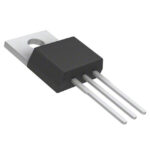 NXPS20S100C,127
The activity of extra discounts on wholesale prices is in full swing…
Please fill in your contact information and we will send you the latest wholesale price list.





