 ChipApex | Global Electronic Components Supplier
SEARCH
Search Product
Search Post
— IC芯片 | 连接器 | 传感器 | 被动器件 —
Search productSearch post
— IC芯片 | 连接器 | 传感器 | 被动器件 —
Consult the customer manager about the wholesale price.
consultation hotline:86-132-6715-2157
email:[email protected]
Contact the product manager for consultation. One-stop consultation is available.
Do you want a lower wholesale price? Please send us your inquiry and we will reply immediately.
The Skyworks OLS249 is a high-performance, low-noise amplifier (LNA) designed for wireless communication applications. It operates within the frequency range of 1850 to 1990 MHz, providing a typical gain of 17 dB and a noise figure of 1.6 dB. The device features an integrated DC-DC converter that allows operation from a single supply voltage ranging from 2.7 V to 3.6 V. Key electrical specifications include a third-order input intercept point (IIP3) of +22 dBm and a 1-dB compression point (P1dB) of +10 dBm. The component is housed in a compact 4 mm x 4 mm QFN package with exposed thermal pad.
Verify the specific ordering suffix against the manufacturer's official datasheet to ensure correct pin configuration and packaging options. Confirm that the requested part number matches the exact frequency band and package type required for your design. Cross-reference the revision history to ensure compatibility with current manufacturing standards. Always check for updated application notes regarding biasing requirements and thermal dissipation guidelines before finalizing procurement.
Select this component when designing receivers for GSM/EDGE or WCDMA bands requiring minimal noise contribution. Evaluate the trade-off between the integrated DC-DC converter's efficiency and potential switching noise if strict RF purity is needed without filtering. Ensure the PCB layout supports the thermal pad connection for optimal heat dissipation. Compare IIP3 and P1dB metrics against system-level interference requirements to guarantee adequate dynamic range.
This LNA belongs to Skyworks' portfolio of radio frequency front-end solutions aimed at improving sensitivity in mobile communications. It complements other components like switches and filters in complete front-end modules. The technology leverages GaAs pHEMT processes to achieve high performance in a small footprint, addressing the space constraints of modern handheld devices.
Check Skyworks' official substitution guide for direct replacements such as the OLS248 or OLS250 series, depending on specific frequency offsets. Verify pin-to-pin compatibility and electrical parameter overlaps before swapping. Ensure any substitute maintains the same package outline and thermal characteristics to avoid redesigning the PCB layout.
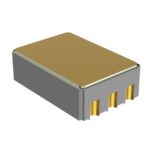 OLS249
The activity of extra discounts on wholesale prices is in full swing…
Please fill in your contact information and we will send you the latest wholesale price list.






