 ChipApex | Global Electronic Components Supplier
SEARCH
Search Product
Search Post
— IC芯片 | 连接器 | 传感器 | 被动器件 —
Search productSearch post
— IC芯片 | 连接器 | 传感器 | 被动器件 —
Consult the customer manager about the wholesale price.
consultation hotline:86-132-6715-2157
email:[email protected]
Contact the product manager for consultation. One-stop consultation is available.
Do you want a lower wholesale price? Please send us your inquiry and we will reply immediately.
The OPIA814ATRA is a single-channel transistor output optoisolator manufactured by TT Electronics/Optek Technology. It features a 5000Vrms isolation voltage and operates within a temperature range of -30°C to +100°C. The device utilizes a 4-SMD, Gull Wing package and supports surface-mount installation. Key electrical parameters include a maximum collector-emitter voltage of 60V, a forward current of 50mA, and a typical rise/fall time of 20µs. The component is currently classified as obsolete.
This component is officially listed as obsolete and no longer manufactured by the producer. Availability is restricted to existing distributor stock or secondary market sources. Verification of part authenticity and storage history is critical due to the end-of-life status. Buyers should confirm lead times and minimum order quantities directly with suppliers, as standard procurement channels may not support new orders.
Engineers selecting this part must account for its obsolete status when designing new products. The 4-SMD package requires compatible PCB footprints. Designers should evaluate the 20µs switching speed against application requirements. Alternative components from the same manufacturer family or competitors should be considered for long-term supply chain stability. Verify that the 5000Vrms isolation rating meets specific safety standards.
The OPIA814ATRA belongs to the Optek transistor output optocoupler series. It shares functional similarities with other models like the OPIA814DTUA but differs in packaging. The device is designed for general-purpose isolation applications where moderate speed and high isolation voltage are required. It represents a legacy solution within the manufacturer's portfolio.
Publicly confirmed substitute part numbers are not available in the provided documentation. Due to the obsolete status, direct pin-to-pin replacements should be verified against updated datasheets. Engineers must perform full electrical and mechanical validation when substituting this component with newer generation optocouplers.
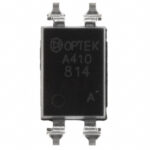 OPIA814ATRA
The activity of extra discounts on wholesale prices is in full swing…
Please fill in your contact information and we will send you the latest wholesale price list.





