ChipApex | Global Electronic Components Supplier
SEARCH
Search Product
Search Post
— IC芯片 | 连接器 | 传感器 | 被动器件 —
Search productSearch post
— IC芯片 | 连接器 | 传感器 | 被动器件 —
Consult the customer manager about the wholesale price.
consultation hotline:86-132-6715-2157
email:[email protected]
Contact the product manager for consultation. One-stop consultation is available.
Do you want a lower wholesale price? Please send us your inquiry and we will reply immediately.
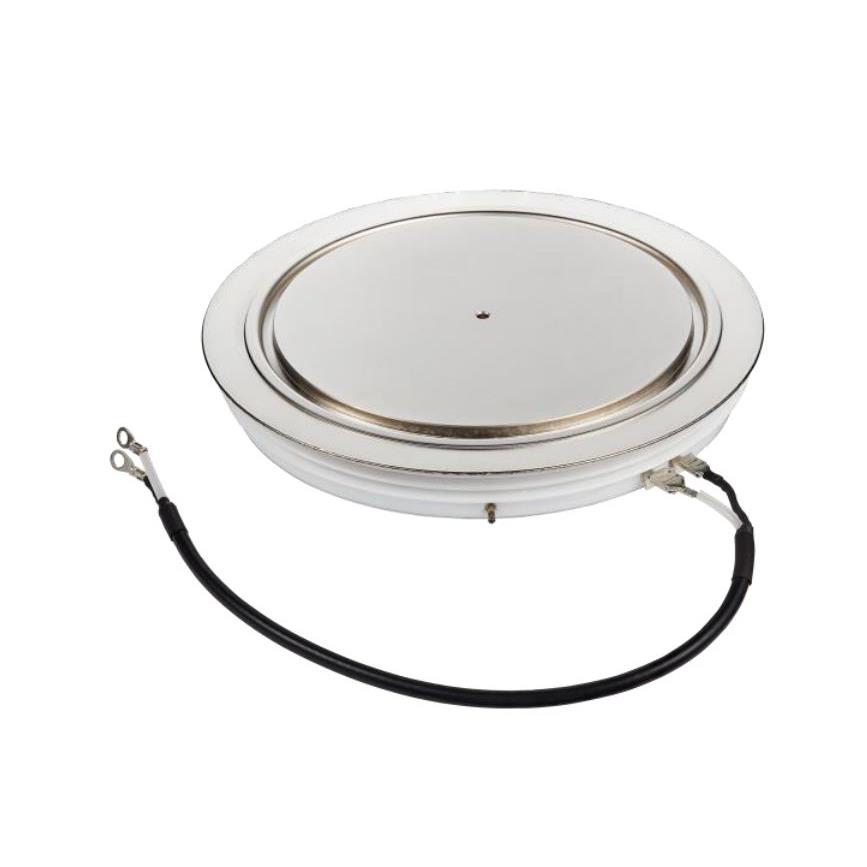
The P2000DL45X168 is a press-pack IGBT with an integrated freewheeling diode, utilizing Trench IGBT 3 technology. It features a collector-emitter voltage (VCES) of 4500 V and a continuous DC collector current (IC nom) of 2000 A at TC = 105°C. The repetitive peak collector current (ICRM) reaches 4000 A for 1 ms pulses. The device supports a maximum junction temperature (Tvj max) of 150°C and operates within a range of -40°C to +150°C. Short-circuit capability is rated at 10.5 kA for up to 10 µs. Thermal resistance from junction to case is 6.6 K/kW for the IGBT and 13.2 K/kW for the diode under two-sided cooling conditions.
Verify the specific ordering suffix against official Infineon documentation to confirm exact configuration details. Ensure that any additional alphanumeric characters in the part number do not alter the electrical characteristics or mechanical interface. Cross-reference the manufacturer's latest datasheet revision to validate all technical parameters before finalizing procurement specifications.
Select this component for high-voltage applications requiring robust short-circuit handling and low conduction losses. Evaluate thermal management requirements carefully, as the device relies on direct contact cooling with specified clamping forces between 50 and 80 kN. Confirm that the gate drive circuitry can handle the internal gate resistance and charge requirements for optimal switching performance.
This component belongs to the P2000DL series of press-pack IGBT modules designed for heavy-duty industrial and traction applications. It integrates a Trench IGBT 3 chip with a complementary diode in a single pressure-contact housing. The design emphasizes high reliability and stability under extreme electrical and thermal stress conditions typical of high-power grid and drive systems.
Publicly confirmed substitute part numbers are not available in the provided documentation. Verify compatibility with existing cooling plates and mounting hardware when considering alternative components, as press-pack devices require precise mechanical fit and specific clamping force distributions.
 P2000DL45X168APTHPSA1
The activity of extra discounts on wholesale prices is in full swing…
Please fill in your contact information and we will send you the latest wholesale price list.