ChipApex | Global Electronic Components Supplier
SEARCH
Search Product
Search Post
— IC芯片 | 连接器 | 传感器 | 被动器件 —
Search productSearch post
— IC芯片 | 连接器 | 传感器 | 被动器件 —
Consult the customer manager about the wholesale price.
consultation hotline:86-132-6715-2157
email:[email protected]
Contact the product manager for consultation. One-stop consultation is available.
Do you want a lower wholesale price? Please send us your inquiry and we will reply immediately.
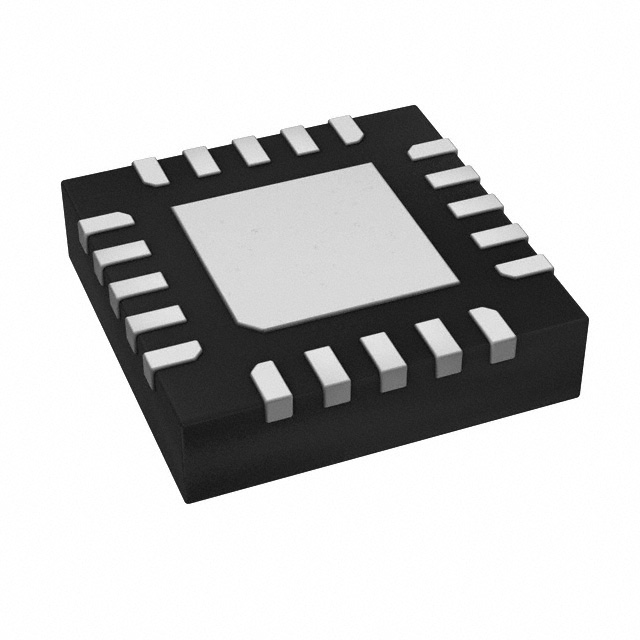
The PAM8001XHR is a 2W Class-D stereo audio amplifier manufactured by Diodes Incorporated, housed in a QFN3x3-20L surface-mount package. It operates on a supply voltage range of 2.5V to 5.5V with a quiescent current of 11.5mA typical. The device delivers 2W output power at 1% THD into a 4Ω load at 5V. Key electrical parameters include a maximum junction temperature of 125°C and an operating ambient temperature range of -20°C to +85°C. It features 64-step DC volume control, anti-saturation technology, and short circuit protection.
Verify the component status before procurement as the datasheet explicitly states this part is not recommended for new designs. Confirm that the QFN3x3-20L package matches your layout requirements. Ensure the application environment stays within the specified -20°C to +85°C operating temperature range. Check for availability of the recommended replacement model if sourcing this discontinued or obsolete part proves difficult.
Select this component for portable applications requiring high efficiency up to 90% and low pop noise. It is suitable for systems where battery life extension is critical due to its low quiescent current. Consider the QFN3x3-20L package for space-constrained designs. Ensure the design accommodates separate PGND traces for each channel to minimize noise currents and maintain performance.
The PAM8001 is part of Diodes Incorporated's Class-D audio amplifier family, designed to replace Class-AB amplifiers in portable devices. The XHR suffix specifically denotes the QFN3x3-20L package type shipped in tape and reel format. This series emphasizes filterless operation and integrated protection features to simplify board design and improve reliability in consumer electronics.
The datasheet recommends using the PAM8019 as a replacement for new designs.
It detects output signal clipping due to over-level input signals and automatically suppresses the clip by adjusting the gain step-by-step to prevent damage to low wattage speakers.
The VPL pin is used to set the maximum output power limit via an external resistor divider, allowing for adjustable power limiting with no clipping.
 PAM8001XHR
The activity of extra discounts on wholesale prices is in full swing…
Please fill in your contact information and we will send you the latest wholesale price list.