ChipApex | Global Electronic Components Supplier
SEARCH
Search Product
Search Post
— IC芯片 | 连接器 | 传感器 | 被动器件 —
Search productSearch post
— IC芯片 | 连接器 | 传感器 | 被动器件 —
Consult the customer manager about the wholesale price.
consultation hotline:86-132-6715-2157
email:[email protected]
Contact the product manager for consultation. One-stop consultation is available.
Do you want a lower wholesale price? Please send us your inquiry and we will reply immediately.
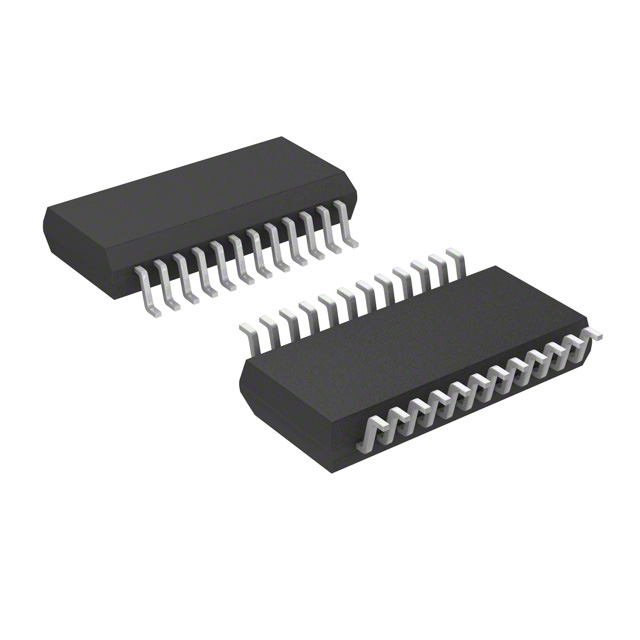
The PAM8007NHR is a filterless Class-D stereo audio amplifier with an integrated headphone output, manufactured by Diodes Incorporated. It delivers 3W output power at 10% THD+N into a 4Ω load with a 5V supply. The device operates on a supply voltage range of 2.5V to 5.5V and features 64-step DC volume control for both speaker and headphone channels. It achieves up to 92% efficiency and includes short-circuit protection and thermal shutdown.
Verify component authenticity through authorized Diodes Incorporated distributors or direct manufacturer channels. Confirm the SSOP-24 package marking matches official datasheet specifications. Ensure the ordering suffix 'NHR' corresponds to the correct tape and reel quantity. Validate RoHS compliance status prior to integration into final assemblies.
Select this component for designs requiring high-efficiency stereo amplification without external output filtering. The integrated headphone driver simplifies dual-output architectures. Consider the 64-step DC volume control for systems lacking digital interfaces. Verify that the 2.5V to 5.5V supply range aligns with the target battery or rail voltage constraints.
The PAM8007 belongs to Diodes Incorporated's portfolio of Class-D audio amplifiers designed for portable electronics. It serves as a high-efficiency alternative to Class-AB amplifiers, extending battery life in mobile devices. The NHR suffix specifically denotes the SSOP-24 package variant supplied in tape and reel format for automated surface-mount assembly.
The datasheet explicitly states that the PAM8007 is not recommended for new designs and directs engineers to use the PAM8019E as the designated replacement part.
The Line/Ear pin controls the switching between speaker and headphone outputs. A logic low activates the speaker output, while a logic high activates the earphone output.
The bypass capacitor determines the startup rate during power-on or recovery from shutdown. It also reduces noise coupling from the internal analog reference, improving PSRR and THD+N performance.
 PAM8007NHR
The activity of extra discounts on wholesale prices is in full swing…
Please fill in your contact information and we will send you the latest wholesale price list.