 ChipApex | Global Electronic Components Supplier
SEARCH
Search Product
Search Post
— IC芯片 | 连接器 | 传感器 | 被动器件 —
Search productSearch post
— IC芯片 | 连接器 | 传感器 | 被动器件 —
Consult the customer manager about the wholesale price.
consultation hotline:86-132-6715-2157
email:[email protected]
Contact the product manager for consultation. One-stop consultation is available.
Do you want a lower wholesale price? Please send us your inquiry and we will reply immediately.
The PC355N is a single-channel transistor output photocoupler manufactured by Sharp Microelectronics. It features a Darlington phototransistor output and utilizes a Mini-flat package for surface mount installation. The device provides an isolation voltage of 3750 Vrms. Key electrical parameters include a maximum collector-emitter voltage of 35 V, a maximum forward current of 50 mA, and a typical forward voltage of 1.2 V to 1.4 V. The minimum current transfer ratio is 600%. Typical switching times are 60 µs for rise time and 53 µs for fall time. The operating temperature range extends from -30°C to +100°C.
Verify component authenticity through authorized distribution channels due to the presence of obsolete status indicators in some market listings. Confirm RoHS compliance details as specifications may vary by production batch. Ensure the specific suffix matches the required packaging format. Cross-reference datasheet revisions to confirm parameter consistency before integration into final designs.
Select this component when high current transfer ratio is required for driving loads directly without additional amplification. The Darlington configuration offers superior sensitivity compared to standard phototransistor outputs. Consider the 35 V collector-emitter voltage limit for low-voltage switching applications. Evaluate the thermal performance within the specified -30°C to +100°C operating range for environmental suitability.
This component belongs to Sharp's PC355 series of optocouplers, which are designed for general-purpose isolation tasks. The series includes variants with different current transfer ratios and output types. The PC355N specifically denotes the standard Darlington output version in the Mini-flat package. It serves as a legacy solution for isolation requirements where high gain is prioritized over switching speed.
Public documentation indicates the PC355N is obsolete. Potential substitutes include the PC355NJ0000F or PC354N1J000F. Verify pin compatibility and electrical parameter alignment, particularly the current transfer ratio and isolation voltage, before substitution.
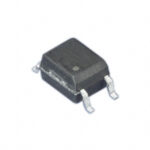 PC355N
The activity of extra discounts on wholesale prices is in full swing…
Please fill in your contact information and we will send you the latest wholesale price list.





