ChipApex | Global Electronic Components Supplier
SEARCH
Search Product
Search Post
— IC芯片 | 连接器 | 传感器 | 被动器件 —
Search productSearch post
— IC芯片 | 连接器 | 传感器 | 被动器件 —
Consult the customer manager about the wholesale price.
consultation hotline:86-132-6715-2157
email:[email protected]
Contact the product manager for consultation. One-stop consultation is available.
Do you want a lower wholesale price? Please send us your inquiry and we will reply immediately.
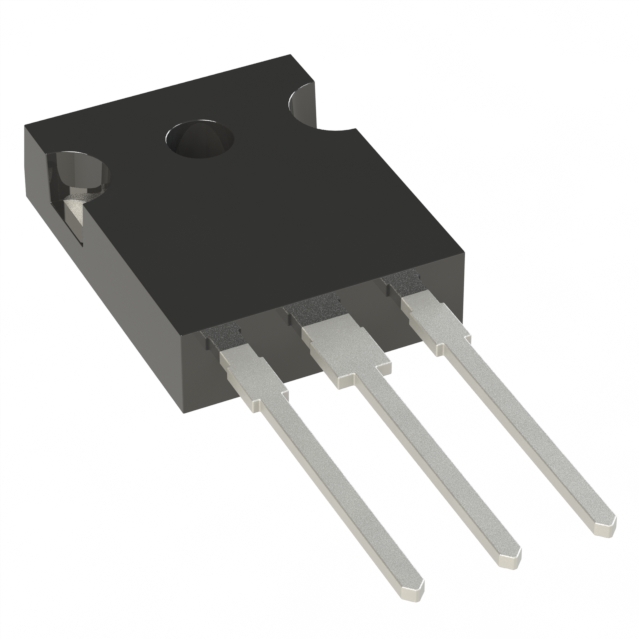
The PCDH2065CCGC_T0_00601 is a silicon carbide (SiC) Schottky barrier diode array manufactured by Panjit International Inc. This discrete semiconductor component features a dual common cathode configuration housed in a TO-247-3 through-hole package. It is rated for a repetitive reverse voltage of 650 V and an average forward current of 10 A. The device exhibits a maximum forward voltage of 1.5 V at rated conditions and supports a surge current of 384 A. With a low reverse leakage current of 600 nA and power dissipation capability of 90 W, it is designed for high-efficiency power conversion applications requiring robust thermal performance and fast switching characteristics.
Verify the specific ordering suffix and packaging type against official Panjit documentation to ensure compatibility with assembly processes. Confirm that the TO-247-3 lead frame dimensions match your PCB footprint requirements. Cross-reference the datasheet parameters for thermal resistance and mounting torque specifications to guarantee reliable operation under expected load conditions.
Select this component when designing circuits that demand high efficiency at elevated temperatures or high frequencies. The SiC material choice is critical for reducing conduction and switching losses in power stages where thermal management is constrained. Ensure the system voltage does not exceed the 650 V rating and that the peak current pulses remain within the 384 A surge limit to prevent device failure.
This part belongs to Panjit's portfolio of silicon carbide discrete semiconductors, specifically targeting high-power density applications. It complements other SiC diodes and MOSFETs in the manufacturer's lineup, offering integrated solutions for modern power electronics. The TO-247 package provides a balance between electrical performance and mechanical robustness suitable for industrial environments.
Consult official cross-reference guides for direct substitutes with matching voltage, current, and package specifications. Verify that any alternative component maintains equivalent thermal characteristics and switching speed profiles to ensure system reliability without redesigning the heat sink or control loop.
 PCDH2065CCGC_T0_00601
The activity of extra discounts on wholesale prices is in full swing…
Please fill in your contact information and we will send you the latest wholesale price list.