 ChipApex | Global Electronic Components Supplier
SEARCH
Search Product
Search Post
— IC芯片 | 连接器 | 传感器 | 被动器件 —
Search productSearch post
— IC芯片 | 连接器 | 传感器 | 被动器件 —
Consult the customer manager about the wholesale price.
consultation hotline:86-132-6715-2157
email:[email protected]
Contact the product manager for consultation. One-stop consultation is available.
Do you want a lower wholesale price? Please send us your inquiry and we will reply immediately.
The PCF8579H/1,118 is a low-power CMOS LCD column driver designed for driving multiplexed dot-matrix displays with rates of 1:8, 1:16, 1:24, or 1:32. It provides 40 outputs capable of driving a 32 x 40 point matrix. The device features 1280-bit display RAM with automatic increment addressing and display bank switching to minimize communication overhead. It communicates via an I²C bus and supports cascading up to 16 units on a single bus using two slave addresses. Designed to pair with the PCF8578 row driver, the combination forms a chipset capable of driving displays up to 40960 points.
Verify component status as the PCF8579 series is listed as discontinued in official documentation. Confirm availability through authorized distributors or support channels. Ensure design-in compatibility with existing system architectures if replacing active components. Review updated datasheets for any specification changes prior to final procurement decisions.
Select this component when designing systems requiring dedicated column drivers for large dot-matrix LCDs. It is intended to be used in conjunction with the PCF8578 row driver to form a complete display control solution. Consider the I²C interface requirements and available address space when planning multi-device configurations. Verify power supply voltage ranges match the target application's logic and LCD drive requirements.
The PCF8579 is part of NXP's LCD display driver family, specifically engineered to handle column driving duties in multiplexed graphic displays. It complements the PCF8578 row driver to create a scalable chipset architecture. This pairing allows designers to drive complex displays up to 40960 points efficiently. The device utilizes standard I²C communication protocols for integration with various microcontroller platforms.
As the PCF8579 is discontinued, evaluate alternative LCD column drivers from current product lines. Check for functional equivalence in output count, multiplexing support, and I²C compatibility. Consult NXP technical support for recommended successor parts that maintain similar performance characteristics and pinout configurations.
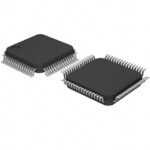 PCF8579H/1:118
The activity of extra discounts on wholesale prices is in full swing…
Please fill in your contact information and we will send you the latest wholesale price list.





