 ChipApex | Global Electronic Components Supplier
SEARCH
Search Product
Search Post
— IC芯片 | 连接器 | 传感器 | 被动器件 —
Search productSearch post
— IC芯片 | 连接器 | 传感器 | 被动器件 —
Consult the customer manager about the wholesale price.
consultation hotline:86-132-6715-2157
email:[email protected]
Contact the product manager for consultation. One-stop consultation is available.
Do you want a lower wholesale price? Please send us your inquiry and we will reply immediately.
The PDTC123JQBZ is an NPN Resistor-Equipped Transistor (RET) from the PDTC143X/123J/143Z/114Y/124XQB series, manufactured by Nexperia. It features a built-in bias resistor network with R1 at 2.2 kΩ and R2 at 47 kΩ, providing a typical bias resistor ratio of 21. The device supports a maximum collector-emitter voltage (VCEO) of 50 V and an output current capability of 100 mA. It is housed in an ultra-small DFN1110D-3 (SOT8015) leadless Surface-Mounted Device plastic package with side-wettable flanks, measuring 1.1 x 1.0 x 0.48 mm. The marking code for this specific part number is E3.
Verify the complete part number including the suffix to ensure correct packaging and tape-and-reel specifications. Confirm that the DFN1110D-3 footprint matches the design requirements, specifically accounting for the side-wettable flank dimensions. Ensure compliance with RoHS standards as indicated in the product data sheet before finalizing procurement orders.
Select the PDTC123JQBZ when a specific bias resistor ratio of approximately 21 is required for NPN switching applications. This part serves as the complement to the PDTA123JQB PNP variant. Consider the 50 V breakdown voltage and 100 mA current limits during thermal management planning. Verify suitability against automotive requirements, as this specific datasheet does not explicitly state AEC-Q101 qualification.
This component belongs to the PDTC143X/123J/143Z/114Y/124XQB series of NPN resistor-equipped transistors. It is designed as a cost-saving alternative to traditional discrete transistor and resistor combinations, such as the BC847 series, in digital applications. The series offers various resistor ratios to accommodate different drive requirements while maintaining a consistent small form factor.
The official PNP complement within the same series is the PDTA123JQB. For direct replacement in existing designs, verify that the new component's pinout and electrical characteristics match the original specification. No other cross-model substitutes are confirmed in the provided documentation.
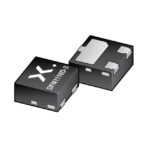 PDTC123JQBZ
The activity of extra discounts on wholesale prices is in full swing…
Please fill in your contact information and we will send you the latest wholesale price list.




