ChipApex | Global Electronic Components Supplier
SEARCH
Search Product
Search Post
— IC芯片 | 连接器 | 传感器 | 被动器件 —
Search productSearch post
— IC芯片 | 连接器 | 传感器 | 被动器件 —
Consult the customer manager about the wholesale price.
consultation hotline:86-132-6715-2157
email:[email protected]
Contact the product manager for consultation. One-stop consultation is available.
Do you want a lower wholesale price? Please send us your inquiry and we will reply immediately.
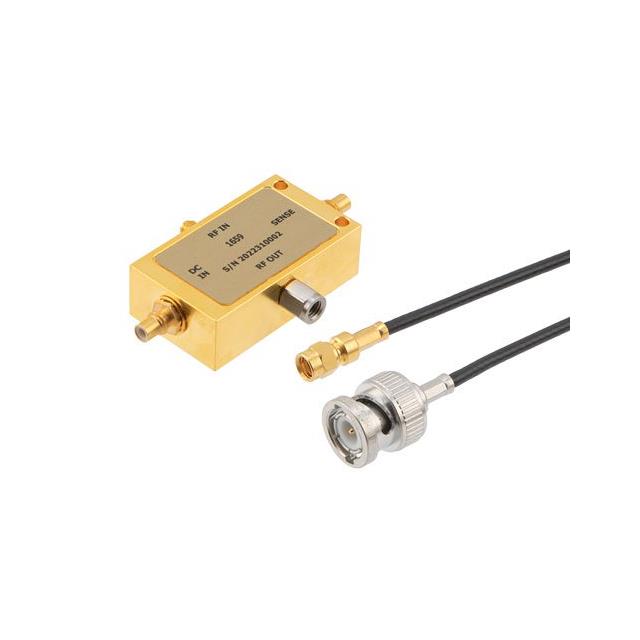
The Pasternack PE1659 is an ultra-wideband Kelvin bias tee designed for RF and microwave applications. It operates across a frequency range of 100 MHz to 110 GHz, providing DC power injection capabilities alongside signal transmission. The device features a 1.0 mm female input connector and a 1.0 mm male output connector, ensuring compatibility with high-frequency test setups. Key electrical specifications include a maximum voltage rating of 16 V and a maximum current capacity of 400 mA. The unit supports a continuous power handling capability of 1 W while maintaining low insertion loss characteristics essential for precision measurements in millimeter-wave environments.
Verify the specific connector gender configuration matches your test fixture requirements before purchase. Confirm that the 16 V voltage and 400 mA current limits are sufficient for your device under test. Ensure environmental conditions align with the operational specifications provided in the official datasheet to maintain performance integrity.
Select this component when ultra-wideband coverage up to 110 GHz is required. The 1.0 mm interface necessitates compatible cabling and fixtures. Consider the 1 W power limit and thermal management needs for continuous operation. This model is suitable for applications demanding minimal signal disturbance during DC biasing.
This bias tee belongs to Pasternack's line of RF misc ICs and modules. It serves as a critical interface between DC power sources and RF signal paths. The design facilitates the simultaneous transmission of RF signals and DC power without interference, supporting complex measurement scenarios in advanced wireless technologies.
No public confirmed substitute part numbers are available in the source documentation. Verify compatibility with existing 1.0 mm infrastructure before considering alternative models.
The maximum voltage rating is 16 V.
The provided documentation specifies it as a general purpose bias tee with defined max voltage and current limits, but does not explicitly detail bidirectional capabilities beyond the stated 16 V/400 mA limits.
 PE1659
The activity of extra discounts on wholesale prices is in full swing…
Please fill in your contact information and we will send you the latest wholesale price list.