ChipApex | Global Electronic Components Supplier
SEARCH
Search Product
Search Post
— IC芯片 | 连接器 | 传感器 | 被动器件 —
Search productSearch post
— IC芯片 | 连接器 | 传感器 | 被动器件 —
Consult the customer manager about the wholesale price.
consultation hotline:86-132-6715-2157
email:[email protected]
Contact the product manager for consultation. One-stop consultation is available.
Do you want a lower wholesale price? Please send us your inquiry and we will reply immediately.
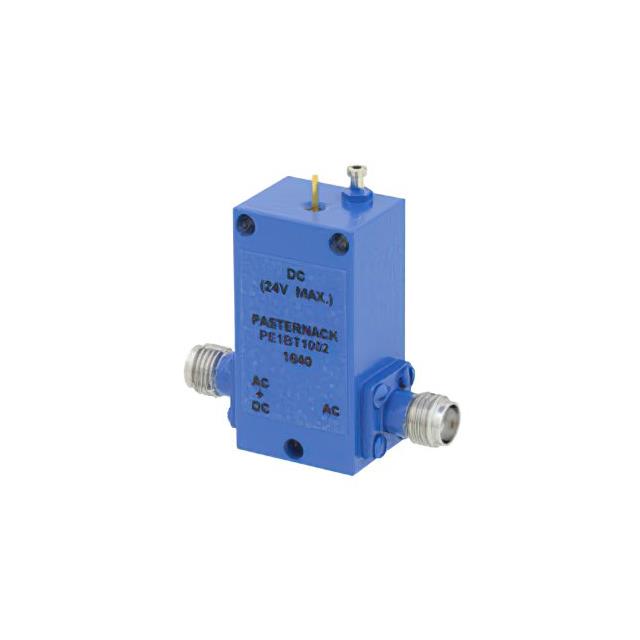
The PE1BT1002 is a general-purpose bias tee manufactured by Pasternack, designed for RF signal conditioning applications. It operates within a frequency range of 0.1 MHz to 18 GHz and utilizes SMA connectors for the RF port. The device supports a maximum DC voltage of 24 Volts and a maximum current rating of 750 mA. Key electrical specifications include an insertion loss of 2 dB and a maximum VSWR of 1.8:1. Additionally, it provides a minimum RF-to-bias isolation of 30 dB, ensuring effective separation between the RF path and the DC bias supply.
Verify that the required operating frequency does not exceed 18 GHz and that the DC load remains within the 24 V and 750 mA limits. Confirm SMA connector gender compatibility with existing cabling infrastructure. Ensure environmental conditions align with standard commercial specifications. Cross-reference datasheet parameters against specific application requirements before integration to guarantee performance stability.
Select this component when a wideband frequency response up to 18 GHz is necessary alongside moderate DC power capabilities. The SMA interface offers broad compatibility with standard RF test fixtures. Consider the 30 dB isolation specification for applications sensitive to DC leakage into the RF chain. Evaluate physical size constraints if space is limited in dense instrument racks or portable test gear.
This bias tee belongs to Pasternack's line of signal conditioning accessories designed for RF systems. It complements other passive RF components by enabling powered operation of active devices without separate power lines at the test point. The product series typically includes variants with different frequency ranges and connector types to suit diverse engineering needs.
The PE1606A is a documented alternative from the same manufacturer, offering similar electrical ratings but with a reduced upper frequency limit of 12.4 GHz. Verify that the lower bandwidth of the substitute meets the specific application requirements before substitution.
 PE1BT1002
The activity of extra discounts on wholesale prices is in full swing…
Please fill in your contact information and we will send you the latest wholesale price list.