ChipApex | Global Electronic Components Supplier
SEARCH
Search Product
Search Post
— IC芯片 | 连接器 | 传感器 | 被动器件 —
Search productSearch post
— IC芯片 | 连接器 | 传感器 | 被动器件 —
Consult the customer manager about the wholesale price.
consultation hotline:86-132-6715-2157
email:[email protected]
Contact the product manager for consultation. One-stop consultation is available.
Do you want a lower wholesale price? Please send us your inquiry and we will reply immediately.
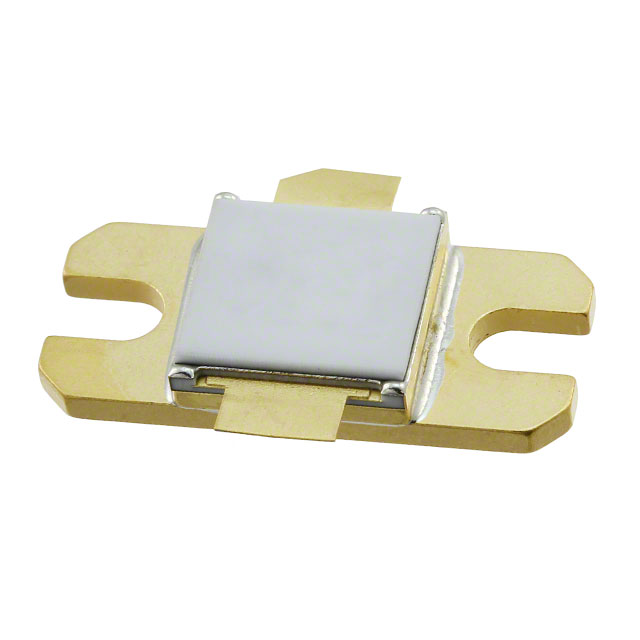
The PH2729-130M is an NPN silicon microwave power transistor designed for radar pulsed power applications. It operates in the S-band from 2.7 to 2.9 GHz with a rated output power of 130 W under 100 µs pulse and 10% duty cycle conditions. The device utilizes a common base configuration and features internal input and output impedance matching. Key electrical specifications include a collector-emitter breakdown voltage (BVCES) of 63 V, a maximum peak collector current of 12.5 A, and a thermal resistance (RTH(JC)) of 0.3 °C/W. It achieves a typical power gain of approximately 9 dB and a collector efficiency exceeding 40% at full output.
Verify component authenticity through authorized MACOM channels or certified distributors. Confirm RoHS compliance status and hermetic seal integrity upon receipt. Ensure storage temperature remains within -65 to +200 °C to maintain junction reliability. Review the latest datasheet revision for any updates to absolute maximum ratings or test conditions prior to final procurement.
Select this component for high-power S-band radar applications requiring robust pulsed performance. The common base configuration simplifies drive circuitry design by eliminating the need for external biasing networks typically required in common emitter setups. Verify that the system can accommodate the specified 100 µs pulse width and 10% duty cycle constraints to prevent thermal overload.
This part belongs to MACOM's portfolio of NPN silicon microwave power transistors optimized for defense and aerospace markets. It shares architectural similarities with other devices in the PH series but is distinctively tuned for the 2.7–2.9 GHz frequency range. The hermetic metal/ceramic package ensures reliability in harsh environmental conditions compared to standard plastic-packaged alternatives.
Direct replacements are not explicitly listed in public documentation. Evaluate alternative MACOM models within the same family based on matching frequency bands, output power levels, and package dimensions. Ensure any substitute maintains compatibility with the existing common base topology and impedance matching requirements.
 PH2729-130M
The activity of extra discounts on wholesale prices is in full swing…
Please fill in your contact information and we will send you the latest wholesale price list.