 ChipApex | Global Electronic Components Supplier

SEARCH
Search Product
Search Post
— IC芯片 | 连接器 | 传感器 | 被动器件 —
Search productSearch post
— IC芯片 | 连接器 | 传感器 | 被动器件 —
Consult the customer manager about the wholesale price.
consultation hotline:86-132-6715-2157
email:[email protected]
Contact the product manager for consultation. One-stop consultation is available.
Do you want a lower wholesale price? Please send us your inquiry and we will reply immediately.
The PS2502-4G is a high-density mounting photodarlington optically coupled isolator manufactured by Isocom Components. It integrates a GaAs light emitting diode and an NPN silicon darlington connected phototransistor within a single package. The device provides electrical isolation between input and output circuits, featuring a high current transfer ratio typical of 2000% and a high-speed switching capability with rise and fall times of 100 µs. It supports a maximum insulation voltage of 5000 Vrms and is available in plastic DIP configurations for through-hole mounting.
Verify the specific suffix 'G' against official Isocom documentation to confirm RoHS compliance status or lead-free plating specifications. Ensure the package type matches the required PCB footprint, as variations exist between standard DIP and surface mount versions within the PS2502 family. Cross-reference datasheets from authorized distributors to confirm availability and exact pinout compatibility with existing designs.
Select this component when high current gain is required to interface low-power control signals with higher load currents. The Darlington output structure allows for direct driving of relays or indicators without additional amplification stages. Consider the thermal management requirements associated with the Darlington configuration's higher saturation voltage compared to single transistor outputs.
The PS2502 series represents a line of high-isolation voltage Darlington transistor type multi photocouplers originally established by NEC and now produced by various manufacturers including Isocom. This series is widely recognized for its reliability in industrial environments. The PS2502-4 variant specifically denotes a quad-channel configuration, providing four independent isolation channels within a single 16-pin package.
Compatible substitutes include PS2502-1, PS2502-2, PS2502L-1, PS2502L-2, and PS2502L-4 from original manufacturers. Verify that replacement parts maintain the same Darlington output topology and insulation voltage ratings.
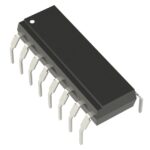 PS2502-4G

The activity of extra discounts on wholesale prices is in full swing…
Please fill in your contact information and we will send you the latest wholesale price list.






