 ChipApex | Global Electronic Components Supplier

SEARCH
Search Product
Search Post
— IC芯片 | 连接器 | 传感器 | 被动器件 —
Search productSearch post
— IC芯片 | 连接器 | 传感器 | 被动器件 —
Consult the customer manager about the wholesale price.
consultation hotline:86-132-6715-2157
email:[email protected]
Contact the product manager for consultation. One-stop consultation is available.
Do you want a lower wholesale price? Please send us your inquiry and we will reply immediately.
The PS2506-1 is a single-element optocoupler featuring an AC-input GaAs light-emitting diode and an NPN silicon Darlington phototransistor output. It provides 5000 Vrms isolation voltage and operates within a temperature range of -55°C to 100°C. The device is housed in a plastic DIP-4 package. Key electrical parameters include a minimum current transfer ratio of 2000%, a maximum forward current of 80 mA, a collector-emitter breakdown voltage of 40 V, and a maximum dark power of 400 nA.
Verify the specific suffix (e.g., -A) against the manufacturer's current datasheet, as suffixes may indicate packaging or revision differences without altering function. Confirm component status, as this part may be discontinued or obsolete depending on the distributor. Ensure the DIP-4 package matches the PCB footprint requirements. Cross-reference safety approvals such as UL and VDE with the latest official documentation to ensure compliance with current regional standards.
Select this component when AC input detection is required alongside high isolation voltage. The Darlington output offers high current transfer ratio suitable for driving low-current loads directly. Consider the DIP-4 package constraints for through-hole mounting. Evaluate thermal performance given the 100°C maximum operating temperature. Verify that the 40 V collector-emitter voltage rating meets the downstream circuit requirements.
The PS2506-1 belongs to the NEPOC series manufactured by California Eastern Laboratories (CEL). This series includes variants like the PS2506L-1, which features a surface-mount Gull-wing package. The family is characterized by high isolation voltages and AC input compatibility, designed for robust industrial and consumer electronics isolation applications requiring certified safety standards.
Publicly confirmed substitute part numbers are not available in the provided source material. Check manufacturer obsolescence notices for potential end-of-life replacements.
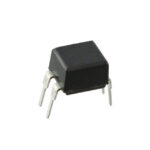 PS2506-1

The activity of extra discounts on wholesale prices is in full swing…
Please fill in your contact information and we will send you the latest wholesale price list.





