ChipApex | Global Electronic Components Supplier

SEARCH
Search Product
Search Post
— IC芯片 | 连接器 | 传感器 | 被动器件 —
Search productSearch post
— IC芯片 | 连接器 | 传感器 | 被动器件 —
Consult the customer manager about the wholesale price.
consultation hotline:86-132-6715-2157
email:[email protected]
Contact the product manager for consultation. One-stop consultation is available.
Do you want a lower wholesale price? Please send us your inquiry and we will reply immediately.
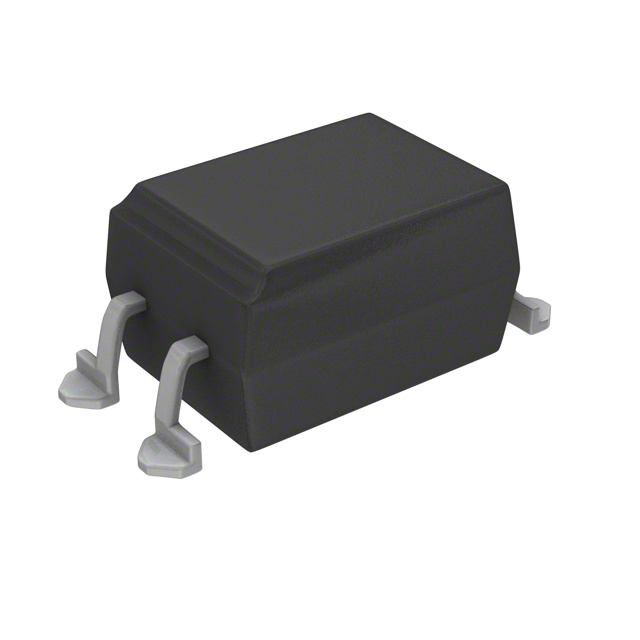
The PS2535L-1-A is a high-voltage optoisolator manufactured by Renesas Electronics Corporation. It features an NPN silicon Darlington-connected phototransistor output paired with a GaAs light-emitting diode input. The device provides robust electrical isolation with a 5000Vrms isolation voltage rating, suitable for applications requiring high collector-to-emitter voltage handling. Packaged in a compact 4-SMD configuration, it ensures reliable signal transmission across isolated circuits while maintaining high safety standards for industrial and commercial electronic systems.
Verify the specific suffix 'A' against the manufacturer's official datasheet to confirm pinout orientation and material compliance status. Ensure the 4-SMD package variant matches the intended PCB footprint. Cross-reference the isolation voltage rating of 5000Vrms with system safety requirements before finalizing component selection for critical applications.
Select this component when high isolation voltage and Darlington gain are required for switching applications. The GaAs LED offers good efficiency, while the NPN Darlington output provides high current transfer ratio. Consider the 4-SMD package size for space-constrained designs. Verify thermal management needs as Darlington structures may generate higher power dissipation compared to standard phototransistors.
This part belongs to the PS2535 series of optocouplers from Renesas Electronics. The series includes variants like PS2535-1 and PS2535L-1, sharing similar internal architectures but differing in packaging or specific electrical characteristics. The PS2535L-1-A specifically denotes the lead-free and halogen-free compliant version in the SMD format, aligning with modern environmental standards.
Direct substitutes include other Renesas PS2535L-1 variants with compatible suffixes. Generic replacements must match the 5000Vrms isolation rating, Darlington output type, and 4-pin SMD package dimensions. Verify CTR (Current Transfer Ratio) specifications to ensure equivalent switching performance in the target circuit design.
 PS2535L-1-A

The activity of extra discounts on wholesale prices is in full swing…
Please fill in your contact information and we will send you the latest wholesale price list.