ChipApex | Global Electronic Components Supplier

SEARCH
Search Product
Search Post
— IC芯片 | 连接器 | 传感器 | 被动器件 —
Search productSearch post
— IC芯片 | 连接器 | 传感器 | 被动器件 —
Consult the customer manager about the wholesale price.
consultation hotline:86-132-6715-2157
email:[email protected]
Contact the product manager for consultation. One-stop consultation is available.
Do you want a lower wholesale price? Please send us your inquiry and we will reply immediately.
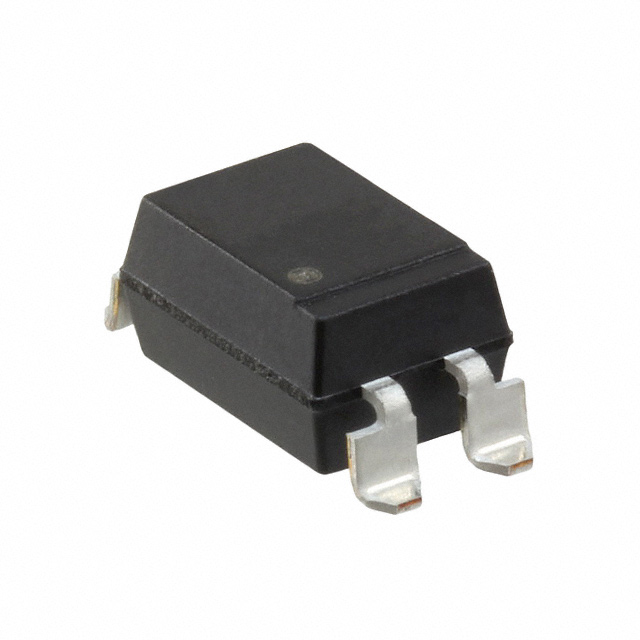
The PS2561AL-1-Q-A is a single-channel transistor output optocoupler from the NEPOC series, manufactured by CEL. It integrates a Gallium Arsenide (GaAs) infrared emitting diode with an NPN silicon phototransistor to provide galvanic isolation. The device features a high isolation voltage of 5000 Vrms and operates within a temperature range of -55 °C to 100 °C. Key electrical parameters include a minimum collector-emitter breakdown voltage of 70 V, a maximum forward current of 30 mA, and a nominal current transfer ratio ranging from 100% to 200% at a forward current of 5 mA. The component is housed in a lead-free surface mount plastic package.
Verify that the specific suffix Q-A corresponds to the required safety certifications and packaging format. Confirm that the manufacturer documentation explicitly lists this part number as a qualified replacement or variant within the NEPOC series. Ensure the procurement source provides valid traceability for the lead-free status and UL recognition details associated with this specific designation.
Select this component when a single-channel transistor output isolator with 5000 Vrms isolation is required. The nominal current transfer ratio of 100% to 200% supports standard logic interface applications. The surface mount L2 lead bending package facilitates automated assembly. Verify that the operating temperature range of -55 °C to 100 °C meets the environmental requirements of the target application.
This component belongs to the NEC/CEL NEPOC series of photocouplers, which are designed for cost-effective isolation solutions. The PS2561AL-1-Q-A shares the same internal structure as the PS2561AL2-1 variants but may differ in specific ordering suffixes related to packaging or certification. The series is widely recognized for its reliability in industrial and consumer markets.
The PS2561AL2-1-E3-A-L is a confirmed substitute within the same family, sharing identical core specifications and package type. Verify compatibility regarding specific safety agency approvals before substitution.
 PS2561AL-1-Q-A

The activity of extra discounts on wholesale prices is in full swing…
Please fill in your contact information and we will send you the latest wholesale price list.