 ChipApex | Global Electronic Components Supplier

SEARCH
Search Product
Search Post
— IC芯片 | 连接器 | 传感器 | 被动器件 —
Search productSearch post
— IC芯片 | 连接器 | 传感器 | 被动器件 —
Consult the customer manager about the wholesale price.
consultation hotline:86-132-6715-2157
email:[email protected]
Contact the product manager for consultation. One-stop consultation is available.
Do you want a lower wholesale price? Please send us your inquiry and we will reply immediately.
The PS2561D-1Y-H-A is a single-channel transistor output optocoupler manufactured by CEL. It integrates an aluminum gallium arsenide (AlGaAs) light-emitting diode and an NPN silicon phototransistor within a four-pin DIP package. The device provides high isolation voltage of 5000Vrms between input and output circuits. It operates over an extended temperature range from -55°C to 110°C, ensuring reliability in demanding environments. The component features low input current requirements and high collector-emitter breakdown voltage, making it suitable for precise signal transmission across isolated boundaries.
Verify the specific suffix 'H-A' corresponds to the required lead-free and halogen-free compliance status as defined by CEL documentation. Confirm that the 4-DIP package dimensions match your PCB footprint requirements. Ensure the operating temperature range aligns with your system's thermal constraints. Cross-reference the datasheet revision date to guarantee parameter accuracy. Validate that the manufacturer source is authorized to prevent counterfeit components.
Choose this component when high isolation voltage and wide temperature operation are critical. The transistor output type suits digital switching applications rather than linear analog transmission. Consider the package style based on assembly method preferences. Evaluate the current transfer ratio requirements against your input drive capabilities. Ensure compatibility with downstream logic levels for reliable signal detection.
This part belongs to the PS2561 series of optocouplers, which are widely used for general-purpose isolation tasks. The series includes various package options and performance grades. CEL continues production under Renesas Electronics branding following corporate acquisitions. The component represents a standard solution for cost-effective isolation in consumer and industrial electronics.
Direct substitutes include PS2561D-1Y-A and PS2561DL-1Y-H-A from the same manufacturer family. Verify pinout compatibility and isolation voltage ratings before substitution. Check if alternative packages like SMD variants meet spatial constraints. Ensure equivalent current transfer ratios to maintain circuit performance without redesign.
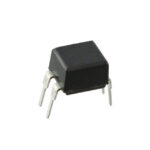 PS2561D-1Y-H-A

The activity of extra discounts on wholesale prices is in full swing…
Please fill in your contact information and we will send you the latest wholesale price list.





