 ChipApex | Global Electronic Components Supplier

SEARCH
Search Product
Search Post
— IC芯片 | 连接器 | 传感器 | 被动器件 —
Search productSearch post
— IC芯片 | 连接器 | 传感器 | 被动器件 —
Consult the customer manager about the wholesale price.
consultation hotline:86-132-6715-2157
email:[email protected]
Contact the product manager for consultation. One-stop consultation is available.
Do you want a lower wholesale price? Please send us your inquiry and we will reply immediately.
The PS2562-1-A is a single-channel transistor output optocoupler manufactured by Renesas Electronics. It features an NPN phototransistor output housed in a 4-pin DIP package for through-hole mounting. The device provides an insulation voltage of 5000 Vrms and supports a maximum collector current of 200 mA with a collector-emitter voltage of 40 V. Key electrical parameters include a minimum current transfer ratio of 200%, a forward current rating of 80 mA, and a forward voltage of 1.17 V. The component operates within a temperature range of -55°C to +100°C and dissipates up to 150 mW.
Verify the specific suffix and manufacturer designation when sourcing, as component availability may vary by region. Confirm that the procurement channel sources directly from authorized distributors or the manufacturer to ensure authenticity. Check RoHS compliance status and lead times prior to finalizing orders, as supply chain conditions can impact delivery schedules for this specific part number.
Select this component when a high current transfer ratio and substantial collector current capacity are required for isolated switching applications. The 80 mA forward current capability allows for efficient drive requirements compared to lower-current alternatives. Ensure the 40 V collector-emitter voltage rating aligns with the load specifications. Consider the DIP-4 package constraints for PCB layout and thermal management during the design phase.
This device belongs to the PS2562 series of transistor output optocouplers from Renesas Electronics. It shares the same internal die and functional characteristics as the PS2562L-1-A but differs in packaging configuration. While the L-series variant utilizes surface-mount technology, the PS2562-1-A is specifically designed for through-hole insertion, offering mechanical stability for applications where solder joint durability is prioritized over board space efficiency.
The PS2562L-1-A serves as a functional equivalent with identical electrical specifications but utilizes a surface-mount package. Direct pin-to-pin replacement is not possible due to the different mounting styles. Designers must evaluate PCB footprint changes and assembly process adjustments if substituting between the through-hole and surface-mount variants within the same product family.
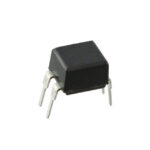 PS2562-1-A

The activity of extra discounts on wholesale prices is in full swing…
Please fill in your contact information and we will send you the latest wholesale price list.






