 ChipApex | Global Electronic Components Supplier

SEARCH
Search Product
Search Post
— IC芯片 | 连接器 | 传感器 | 被动器件 —
Search productSearch post
— IC芯片 | 连接器 | 传感器 | 被动器件 —
Consult the customer manager about the wholesale price.
consultation hotline:86-132-6715-2157
email:[email protected]
Contact the product manager for consultation. One-stop consultation is available.
Do you want a lower wholesale price? Please send us your inquiry and we will reply immediately.
The CEL PS2565-2 is a two-channel transistor output optoisolator featuring high isolation voltage and AC input response capabilities. It integrates GaAs light emitting diodes with NPN silicon phototransistors to provide electrical isolation between circuits. Key electrical parameters include a minimum DC current transfer ratio of 80% at 5mA input current, with a maximum ratio reaching 400%. The device supports an operating temperature range from -55°C to 100°C and offers 5000Vrms voltage isolation. It is designed for through-hole mounting and accepts both AC and DC input signals.
Verify the specific manufacturer suffix when ordering, as variations such as -V may exist. Confirm the part status, as some listings indicate obsolete status for certain manufacturing batches. Ensure compatibility with existing PCB footprints and soldering profiles. Check for updated datasheets from CEL or authorized distributors to confirm current production availability and any design-in recommendations.
Select this component when dual-channel isolation is required within a single package. The high current transfer ratio ensures reliable switching with low input drive currents. Consider the through-hole package type for mechanical stability in high-vibration environments. Verify that the AC input response meets the frequency requirements of the application. Compare specifications against similar series parts if space or pinout constraints exist.
The PS2565 series belongs to a family of high isolation voltage multi photocouplers originally developed by NEC Electronics. These devices are characterized by their use of GaAs LEDs and NPN phototransistors to achieve fast switching speeds and high reliability. The series includes variants like PS2565-1 and PS2565L-2, differing in channel count and physical dimensions. This specific model represents the two-channel version of the standard PS2565 architecture.
Check for equivalents from other manufacturers offering similar isolation voltages and current transfer ratios. Verify pinout compatibility before substitution to avoid circuit damage. Review thermal characteristics and package dimensions to ensure fit within the existing assembly. Confirm that the replacement part supports the same AC input response requirements.
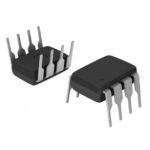 PS2565-2

The activity of extra discounts on wholesale prices is in full swing…
Please fill in your contact information and we will send you the latest wholesale price list.






