ChipApex | Global Electronic Components Supplier

SEARCH
Search Product
Search Post
— IC芯片 | 连接器 | 传感器 | 被动器件 —
Search productSearch post
— IC芯片 | 连接器 | 传感器 | 被动器件 —
Consult the customer manager about the wholesale price.
consultation hotline:86-132-6715-2157
email:[email protected]
Contact the product manager for consultation. One-stop consultation is available.
Do you want a lower wholesale price? Please send us your inquiry and we will reply immediately.
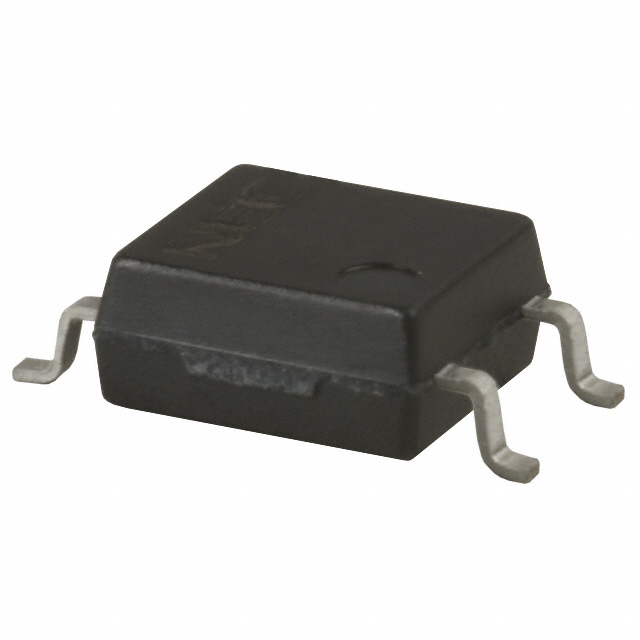
The CEL PS2701-1-V-F3-M-A is a single-channel transistor output optocoupler featuring high isolation voltage and fast switching capabilities. It utilizes an NPN phototransistor output with a maximum collector-emitter voltage of 40V and a peak collector current of 80mA. The device offers a typical rise time of 3µs and fall time of 5µs, ensuring rapid signal transmission. Electrical parameters include a minimum current transfer ratio of 50% and a maximum of 150% at 5mA input current. The forward voltage is typically 1.4V, with a maximum power dissipation of 150mW. Operating temperatures range from -55°C to +100°C, providing robust performance in demanding environments.
Verify component authenticity through authorized distributors or direct manufacturer channels. Confirm RoHS compliance status and specific lot traceability requirements prior to purchase. Ensure storage conditions adhere to moisture sensitivity levels if applicable. Review datasheet revisions for any updates to electrical characteristics or mechanical dimensions. Validate that the selected package variant matches the intended PCB footprint and assembly process specifications.
Select this component when high-speed digital isolation is required within a compact surface-mount form factor. Consider the 40V collector-emitter voltage limit for low-voltage logic interfacing applications. Evaluate the 80mA output current capability against load requirements to ensure adequate drive strength. Compare the 3µs switching speed against system timing constraints to verify suitability for high-frequency signals. Assess thermal management needs based on the 150mW power dissipation rating under continuous operation.
This part belongs to the PS2701 series of small outline package optocouplers designed for general-purpose isolation tasks. The series emphasizes compactness and reliability for modern electronic designs. Similar variants may offer different voltage ratings or packaging options, but this specific model focuses on balanced speed and isolation performance. It serves as a standard solution for replacing older relay-based isolation methods in space-constrained applications.
Public confirmed substitute part numbers are not available in the provided documentation.
 PS2701-1-V-F3-M-A

The activity of extra discounts on wholesale prices is in full swing…
Please fill in your contact information and we will send you the latest wholesale price list.