ChipApex | Global Electronic Components Supplier
SEARCH
Search Product
Search Post
— IC芯片 | 连接器 | 传感器 | 被动器件 —
Search productSearch post
— IC芯片 | 连接器 | 传感器 | 被动器件 —
Consult the customer manager about the wholesale price.
consultation hotline:86-132-6715-2157
email:[email protected]
Contact the product manager for consultation. One-stop consultation is available.
Do you want a lower wholesale price? Please send us your inquiry and we will reply immediately.
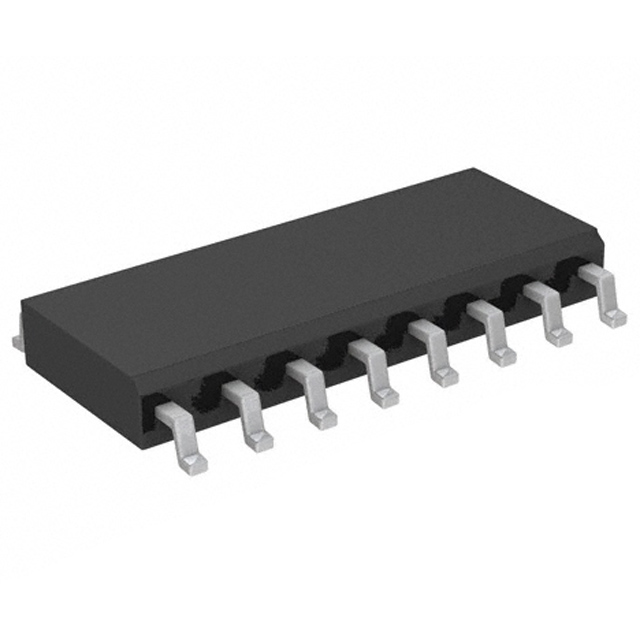
The PS2801C-4-F3-A is a quad-channel transistor output optocoupler manufactured by Renesas Electronics. It features an NPN phototransistor output and utilizes a GaAs infrared LED for input isolation. The device is housed in a compact SSOP-16 surface-mount package with a 1.27 mm pin pitch, designed for high-density applications. Key electrical parameters include a maximum collector-emitter voltage of 80 V, a maximum forward current of 50 mA, and a typical rise time of 3 µs. It provides an isolation voltage of 2500 Vrms and operates within a temperature range of -55°C to +100°C.
Verify the specific suffix 'F3' against the manufacturer's latest documentation to confirm tape and reel packaging specifications. Ensure that the component designation matches the exact datasheet revision required for your design. Cross-reference the part number with official Renesas databases to confirm availability status and any potential lifecycle changes before finalizing procurement plans.
Select this component when multiple isolated channels are required in a space-constrained environment. The quad configuration reduces board area compared to discrete solutions. Consider the 80 V collector-emitter voltage rating for low-voltage switching applications. Verify that the 3 µs rise time meets the speed requirements of the target interface signals.
This part belongs to the PS2801 series of transistor output optocouplers from Renesas. The series is characterized by its small SSOP footprint and high isolation performance. The PS2801C-4 variant specifically offers four channels, distinguishing it from single or dual-channel counterparts in the same family. It is designed for general-purpose industrial and commercial isolation tasks.
Consult the official Renesas replacement guide for verified substitute part numbers. Generic equivalents may not match the specific isolation voltage or channel count requirements. Do not assume cross-compatibility with other manufacturers without verifying pinout and electrical parameter alignment.
 PS2801C-4-F3-A
The activity of extra discounts on wholesale prices is in full swing…
Please fill in your contact information and we will send you the latest wholesale price list.