ChipApex | Global Electronic Components Supplier
SEARCH
Search Product
Search Post
— IC芯片 | 连接器 | 传感器 | 被动器件 —
Search productSearch post
— IC芯片 | 连接器 | 传感器 | 被动器件 —
Consult the customer manager about the wholesale price.
consultation hotline:86-132-6715-2157
email:[email protected]
Contact the product manager for consultation. One-stop consultation is available.
Do you want a lower wholesale price? Please send us your inquiry and we will reply immediately.
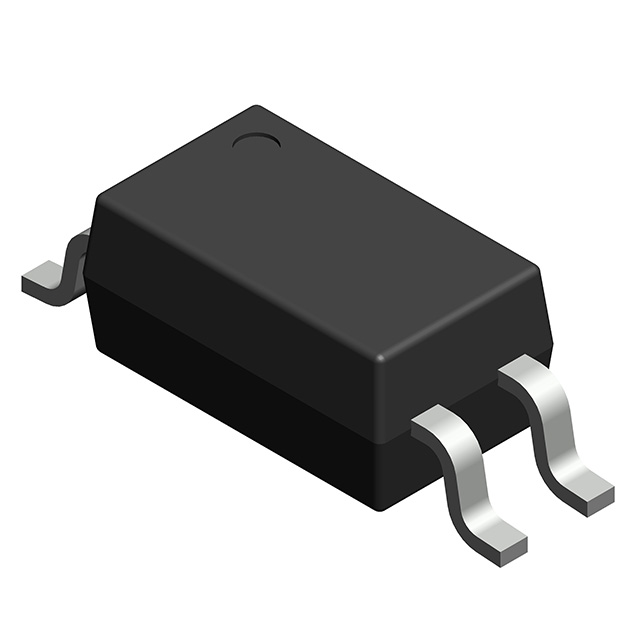
The PS2833-1-F3-A is a single-channel optoisolator featuring a Darlington transistor output, manufactured by Renesas Electronics Corporation. It provides an isolation voltage of 2500Vrms and operates within a temperature range of -55°C to 100°C. The device supports a maximum DC forward current of 50 mA with a typical forward voltage of 1.2 V. Output specifications include a collector-emitter saturation voltage of up to 1 V and a maximum output voltage of 350 V. The current transfer ratio ranges from 400% to 4500% at 1 mA input. Typical switching times are 20 µs for rise and 5 µs for fall. It is housed in a 4-SSOP surface-mount package.
Verify the specific suffix F3-A against the official Renesas datasheet to confirm pinout configuration and tape-and-reel specifications. Ensure compliance with RoHS3 standards and check moisture sensitivity level classifications prior to storage and handling. Confirm that the 4-SSOP package dimensions match the target PCB footprint requirements.
Select this component when high gain is required due to the Darlington output structure, which offers superior current transfer compared to standard phototransistors. Consider the slower switching speeds inherent to Darlington configurations when designing for high-frequency signal transmission. Evaluate thermal management needs given the power dissipation limits within the small SSOP package.
This part belongs to the NEPOC series of optocouplers from Renesas Electronics. It is designed for general-purpose isolation tasks where high sensitivity is prioritized over speed. The product line emphasizes reliability in industrial and consumer electronics applications requiring robust electrical separation between circuits.
Public confirmed substitute part numbers: PS2733-1-F3-A (similar Darlington output but different switching characteristics). Verify compatibility regarding isolation voltage ratings and package dimensions before substitution.
The current transfer ratio typically ranges from 400% to 4500% when tested at a forward current of 1 mA.
No, the Darlington output results in longer rise and fall times (typically 20 µs and 5 µs), making it unsuitable for high-frequency data transmission.
 PS2833-1-F3-A
The activity of extra discounts on wholesale prices is in full swing…
Please fill in your contact information and we will send you the latest wholesale price list.