ChipApex | Global Electronic Components Supplier

SEARCH
Search Product
Search Post
— IC芯片 | 连接器 | 传感器 | 被动器件 —
Search productSearch post
— IC芯片 | 连接器 | 传感器 | 被动器件 —
Consult the customer manager about the wholesale price.
consultation hotline:86-132-6715-2157
email:[email protected]
Contact the product manager for consultation. One-stop consultation is available.
Do you want a lower wholesale price? Please send us your inquiry and we will reply immediately.
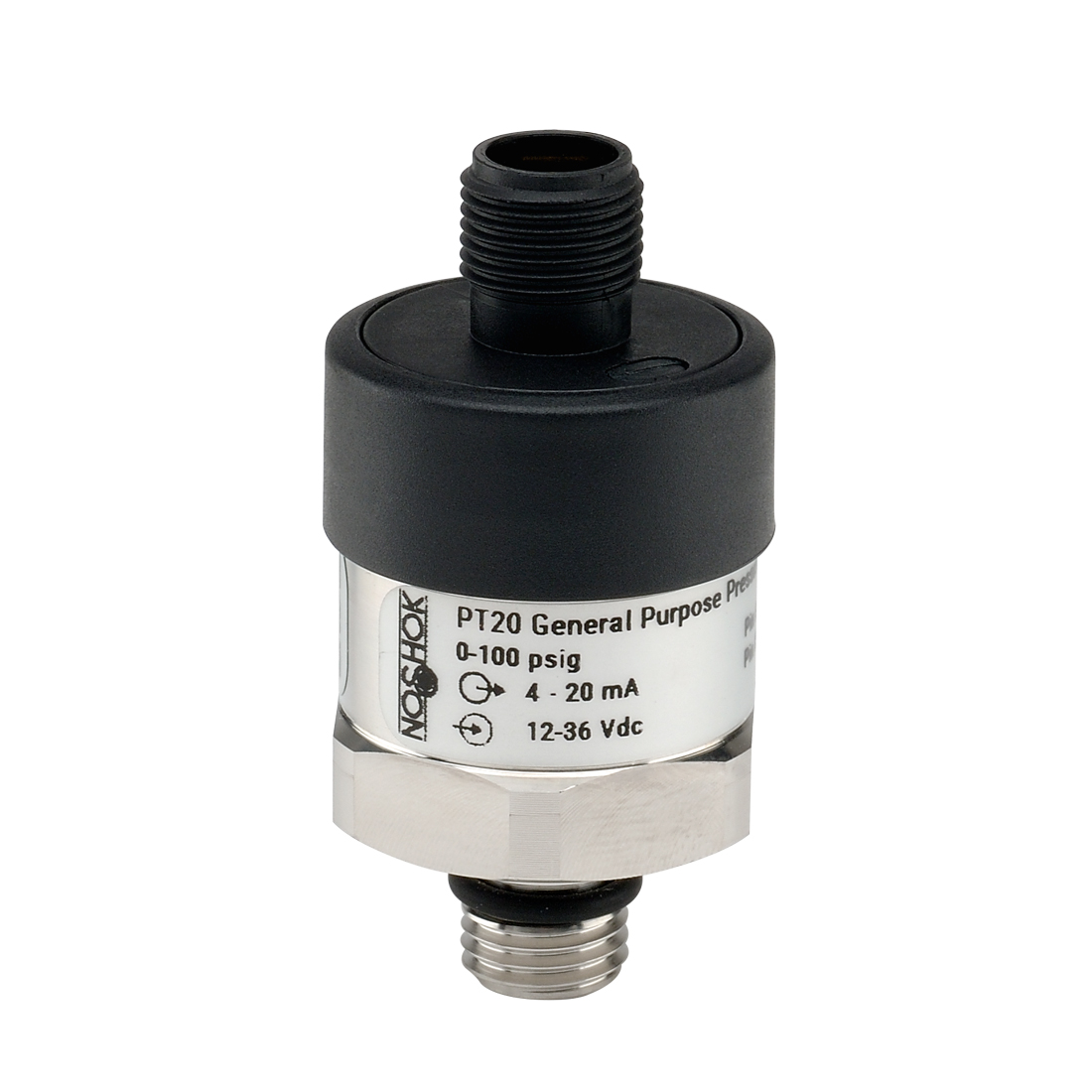
The NOSHOK PT20-100psia-1-2-2-25 is a general purpose fixed range pressure transmitter designed for industrial applications. It features a measurement range of 0 to 100 psia (0 to 689.48 kPa) absolute pressure. The device utilizes a male 1/4 inch (6.35 mm) connection interface. It provides an analog voltage output signal ranging from 0 to 5 VDC, powered by an input supply voltage between 8 and 30 VDC. The unit maintains an accuracy of ±0.5% of span, calculated using the best fit straight line method per IEC 61298-2 standards.
Verify that the specific suffix 'psia' confirms absolute pressure requirements rather than gauge or compound ranges. Ensure the mating connector cable assembly is ordered separately as an accessory part. Confirm the 1/4 inch male port matches the installation interface. Validate the 0-5 VDC output aligns with the receiving control system's input specifications before finalizing the purchase order.
Select this model when absolute pressure measurement within the 0-100 psia range is required. The PT20 series serves as an enhanced replacement for older NOSHOK 100, 200, 300, and 615 series transmitters. Choose this variant over gauge models if measuring pressure relative to a perfect vacuum. The stainless steel wetted parts provide durability in standard industrial conditions.
This component belongs to the NOSHOK PT Series, which represents an expanded portfolio of fixed-range general purpose pressure transmitters. The PT Series replaces previous generations including the 100, 200, 300, and 615 series. These transmitters are engineered to deliver reliable performance across various industrial sectors, offering improved specifications compared to legacy models while maintaining compatibility with standard mounting and wiring practices.
The PT20 series is the designated replacement for the NOSHOK 100, 200, 300, and 615 series transmitters. When substituting older models, verify that the new PT20 unit meets the original application's pressure range and output signal requirements. Ensure physical mounting dimensions and electrical connections remain compatible with existing infrastructure.
 PT20-100psia-1-2-2-25

The activity of extra discounts on wholesale prices is in full swing…
Please fill in your contact information and we will send you the latest wholesale price list.