ChipApex | Global Electronic Components Supplier

SEARCH
Search Product
Search Post
— IC芯片 | 连接器 | 传感器 | 被动器件 —
Search productSearch post
— IC芯片 | 连接器 | 传感器 | 被动器件 —
Consult the customer manager about the wholesale price.
consultation hotline:86-132-6715-2157
email:[email protected]
Contact the product manager for consultation. One-stop consultation is available.
Do you want a lower wholesale price? Please send us your inquiry and we will reply immediately.
The NOSHOK PT20-100PSIG-1-5-2-8-ST8-CC is an industrial pressure transmitter designed for fixed range applications. It features a measurement span of 0 to 100 psi gauge. The device utilizes a 4 mA to 20 mA output signal with two-wire configuration. Non-linearity is specified as 0.5% of span, calculated using the best fit straight line method per IEC 61298-2 at reference conditions. The unit includes a male 1/4 inch (6.35mm) NPT process connection and conforms to DIN form A mounting standards.
Verify that the specific suffix CC matches the required environmental or material specifications for your application environment. Confirm the process connection type aligns with existing piping infrastructure. Ensure the supply voltage supports the two-wire loop requirements. Check compliance documentation against local industry regulations. Validate the pressure rating against maximum operating limits to prevent sensor damage during installation.
Select this model when a fixed 100 psi gauge range is required for industrial processes. Choose the 4-20mA output for compatibility with standard PLC and DCS inputs. Opt for the DIN form A style if space constraints or mounting standards dictate this profile. Consider the 1/4 NPT connection for ease of installation in common piping systems. Evaluate the 0.5% span accuracy against overall system tolerance requirements.
This component belongs to the NOSHOK PT20 series, which replaces older legacy models such as the 300 series. The PT20 series is engineered for industrial general-purpose applications. It provides a reliable solution for pressure measurement where standardization and durability are prioritized. The series maintains consistent performance characteristics across various pressure ranges.
The PT20 series explicitly replaces the NOSHOK 300 series transmitters. When substituting older units, verify that the mounting dimensions and electrical connections remain compatible. Ensure the new model's pressure rating meets or exceeds the original system requirements. Confirm that the output signal type matches the receiving instrumentation.
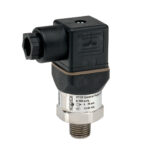 PT20-100PSIG-1-5-2-8-ST8-CC

The activity of extra discounts on wholesale prices is in full swing…
Please fill in your contact information and we will send you the latest wholesale price list.