ChipApex | Global Electronic Components Supplier

SEARCH
Search Product
Search Post
— IC芯片 | 连接器 | 传感器 | 被动器件 —
Search productSearch post
— IC芯片 | 连接器 | 传感器 | 被动器件 —
Consult the customer manager about the wholesale price.
consultation hotline:86-132-6715-2157
email:[email protected]
Contact the product manager for consultation. One-stop consultation is available.
Do you want a lower wholesale price? Please send us your inquiry and we will reply immediately.
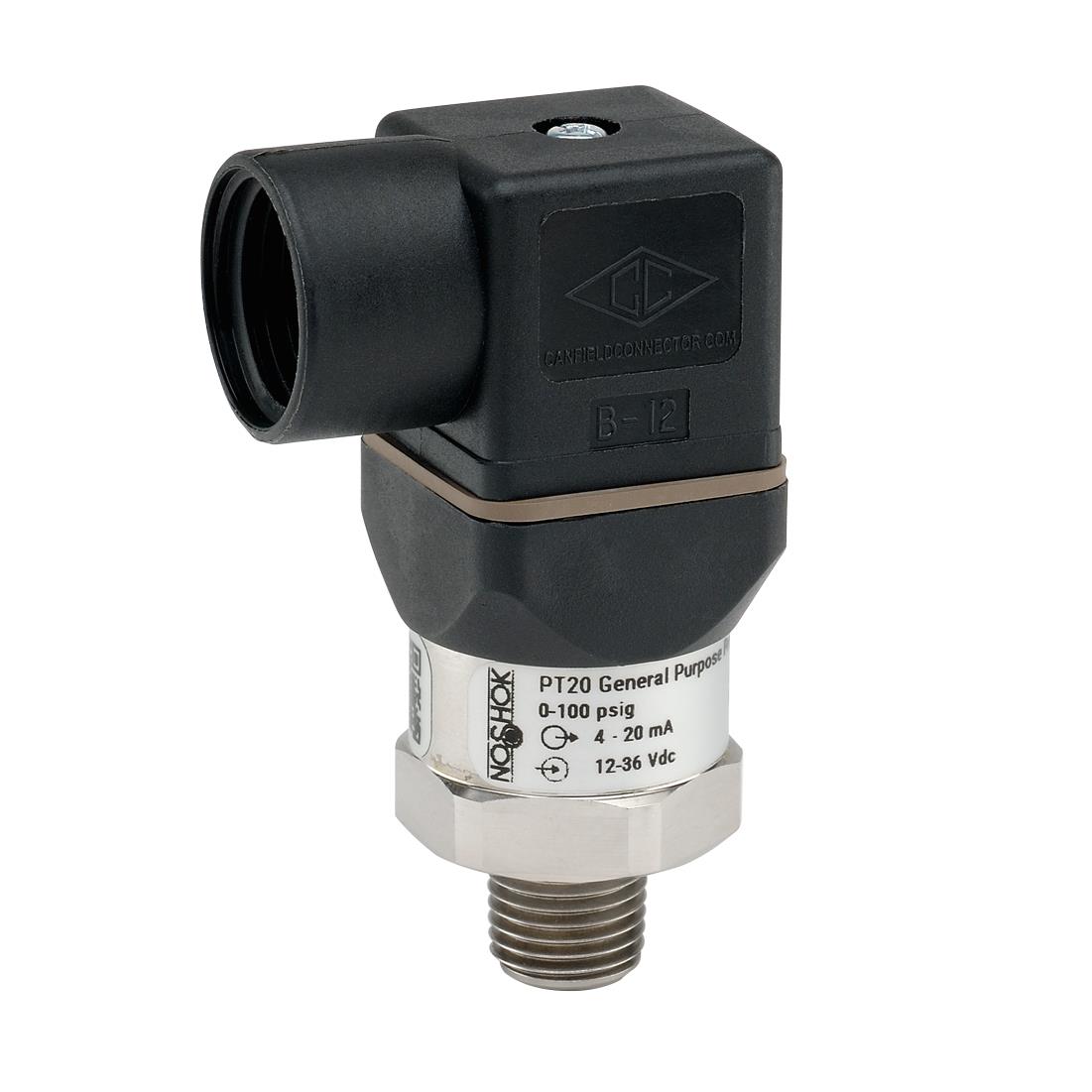
The NOSHOK PT20-200PSIG-1-1-2-14-ST8 is a general-purpose fixed-range pressure transmitter designed for industrial applications. It features a gauge pressure range of -15 to 200 psi. The device provides a 4 to 20 mA analog output signal and utilizes a DIN form A connector interface. Accuracy is specified at 0.5% of span non-linearity using the best fit straight line method. The unit is constructed with stainless steel wetted materials suitable for various fluid media.
Verify the specific pressure range requirement matches the -15 to 200 psi gauge scale before ordering. Confirm that the DIN form A connector type aligns with existing cable assemblies or controller inputs. Ensure the process media is compatible with the stainless steel wetted materials. Check environmental conditions against the operational temperature limits defined in the official datasheet to guarantee performance stability.
Select this model when a robust, general-purpose transmitter is required for moderate pressure ranges up to 200 psi. The 0.5% accuracy level suits most standard industrial monitoring tasks. Consider the DIN form A connector if space constraints or vibration resistance are priorities. Evaluate the stainless steel construction against chemical compatibility requirements of the target medium to prevent sensor degradation over time.
This component belongs to the NOSHOK PT20 series of general-purpose fixed-range transmitters. The series offers various pressure ranges from 1 psig to 15000 psig and supports gauge, compound, absolute, and vacuum configurations. The PT20 line is designed for durability in harsh industrial environments, providing reliable signal transmission for pressure, temperature, and force measurement applications across multiple sectors.
Consult NOSHOK distributors for direct equivalents within the PT20 series. Verify that any substitute part maintains the same -15 to 200 psi gauge range and 4 to 20 mA output. Ensure the replacement retains the DIN form A connector interface to avoid wiring modifications. Cross-reference accuracy specifications to maintain system precision levels.
 PT20-200PSIG-1-1-2-14-ST8

The activity of extra discounts on wholesale prices is in full swing…
Please fill in your contact information and we will send you the latest wholesale price list.