ChipApex | Global Electronic Components Supplier
SEARCH
Search Product
Search Post
— IC芯片 | 连接器 | 传感器 | 被动器件 —
Search productSearch post
— IC芯片 | 连接器 | 传感器 | 被动器件 —
Consult the customer manager about the wholesale price.
consultation hotline:86-132-6715-2157
email:[email protected]
Contact the product manager for consultation. One-stop consultation is available.
Do you want a lower wholesale price? Please send us your inquiry and we will reply immediately.
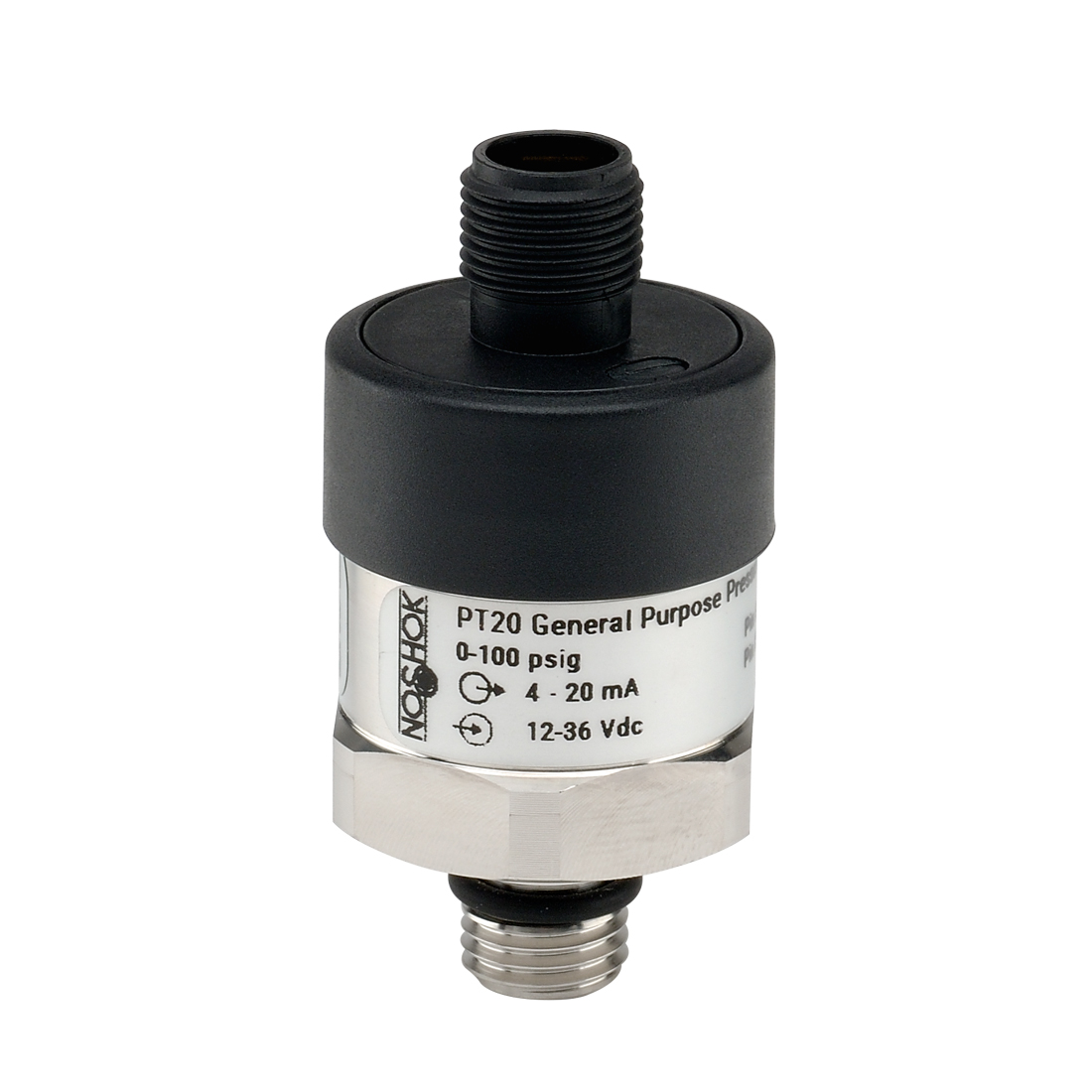
The NOSHOK PT20-5000PSIG-1-2-2-25-CC is a high-pressure pressure transmitter from the PT Series, designed to replace legacy 100, 200, 300, and 615 series models. It features a maximum operating pressure of 5000 PSIG. The unit utilizes a 1/2-14 NPT process connection for fluid interface. Electrical connectivity is provided via a 4-pin M12 connector. The device incorporates a stainless steel wetted material construction to ensure durability in demanding industrial environments.
Verify the specific application requirements against the 5000 PSIG rating and 1/2-14 NPT connection specifications before ordering. Confirm that the 4-pin M12 connector aligns with existing control system wiring. Ensure the environment is compatible with the stainless steel wetted materials. Cross-reference legacy part numbers using the official PT Series Crossover Tool if replacing older models. Validate authenticity through authorized distribution channels.
Select this model when high-pressure measurement up to 5000 PSIG is required. The 1/2-14 NPT port suits standard high-pressure piping interfaces. The M12 connector facilitates easy integration into modern control architectures. Consider the stainless steel construction for corrosion resistance in chemical or oil applications. This transmitter serves as a direct upgrade path for facilities utilizing discontinued 100, 200, 300, or 615 series units.
This component belongs to the NOSHOK PT Series, which consolidates multiple legacy product lines into a unified platform. The series replaces the 100, 200, 300, and 615 series transmitters, offering improved accuracy and standardized configurations. The PT Series covers a broad range of industrial measurement needs, including analog and digital options, supporting various pressure ranges and connection types for diverse engineering applications.
This model directly replaces legacy NOSHOK part numbers from the 100, 200, 300, and 615 series. Users should utilize the official PT Series Part Number Crossover Tool to identify the exact equivalent legacy code. Verify that the physical dimensions and mounting requirements match the existing installation space to ensure seamless retrofitting without mechanical modification.
 PT20-5000PSIG-1-2-2-25-CC
The activity of extra discounts on wholesale prices is in full swing…
Please fill in your contact information and we will send you the latest wholesale price list.