ChipApex | Global Electronic Components Supplier
SEARCH
Search Product
Search Post
— IC芯片 | 连接器 | 传感器 | 被动器件 —
Search productSearch post
— IC芯片 | 连接器 | 传感器 | 被动器件 —
Consult the customer manager about the wholesale price.
consultation hotline:86-132-6715-2157
email:[email protected]
Contact the product manager for consultation. One-stop consultation is available.
Do you want a lower wholesale price? Please send us your inquiry and we will reply immediately.
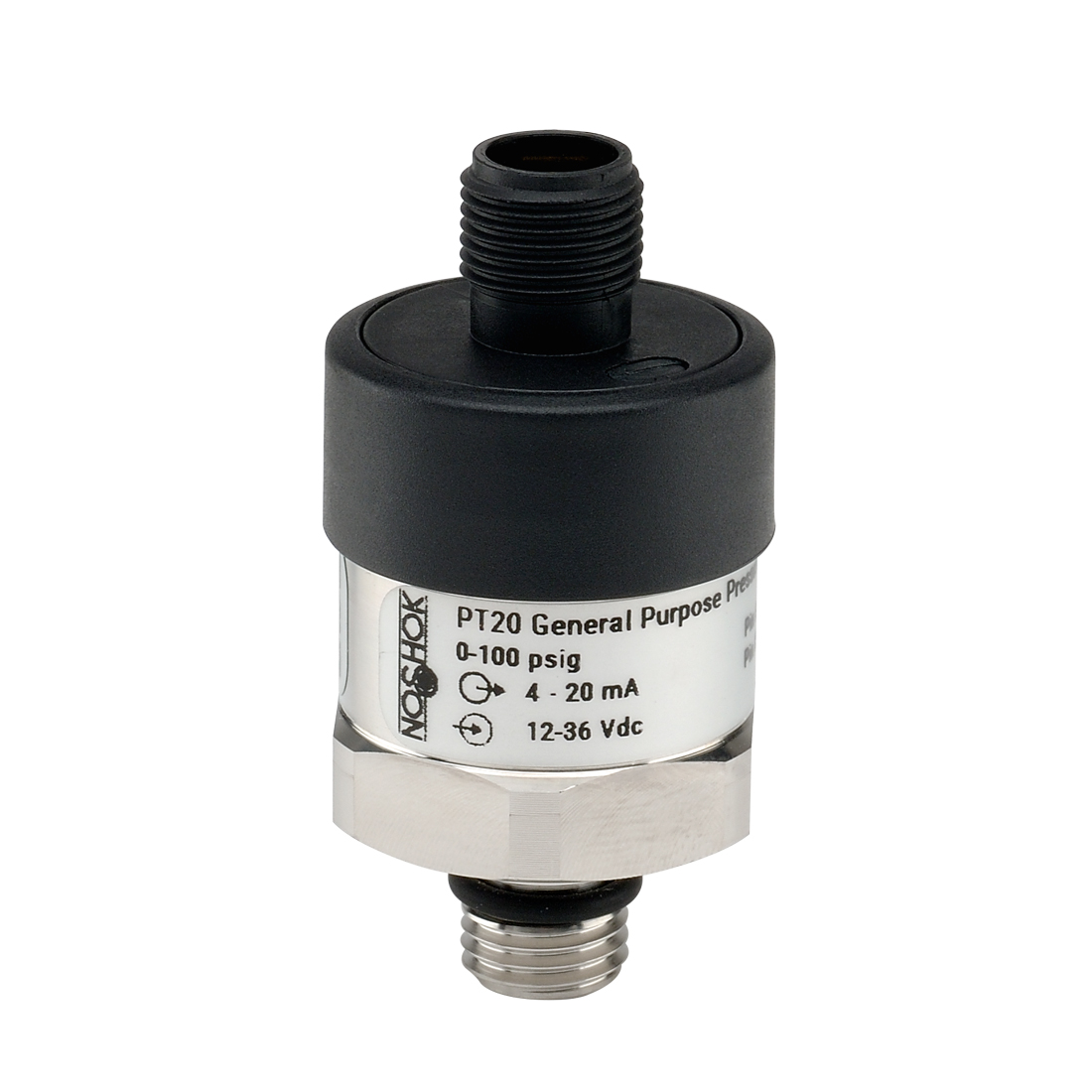
The NOSHOK PT20-6000PSIG-1-2-2-25 is an industrial general-purpose fixed-range pressure transmitter designed for gauge pressure measurement. It features a measurement range of 0 to 6000 psi (0 kPa to 41368.54 kPa). The device provides analog current and analog voltage output signals. It maintains an accuracy of ±0.5% of span, utilizing non-linearity best fit straight line calibration. This component is engineered for robust performance in demanding industrial environments requiring precise pressure monitoring.
Verify the specific ordering suffixes such as -CC or -ST8-CC when sourcing replacements, as these indicate distinct connector or termination configurations. Confirm that the required output type matches the available analog current or voltage options. Ensure the gauge pressure requirement aligns with the 0 to 6000 psi range before procurement. Cross-reference the part number against official NOSHOK documentation to confirm active status and availability.
Select this model when a fixed-range gauge pressure transmitter is required for industrial settings. The 6000 psi range suits high-pressure applications. Choose based on the need for either analog current or voltage outputs. The ±0.5% accuracy meets standard industrial precision requirements. Verify interface and connection specifications match the system design before final selection.
This component belongs to the NOSHOK PT20 series of pressure transmitters. The series offers various ranges and output types tailored for industrial use. The PT20-6000PSIG variant specifically addresses high-pressure gauge measurement needs. It complements other NOSHOK products like pressure gauges by providing electronic signal transmission capabilities for integration into control systems.
Direct substitutes include PT20-6000PSIG-1-2-2-25-CC and PT20-6000PSIG-1-2-2-25-ST8-CC. These variants share the same core pressure and accuracy specifications but differ in physical connectors or cable terminations. Verify the specific interface requirement before substituting.
 PT20-6000PSIG-1-2-2-25
The activity of extra discounts on wholesale prices is in full swing…
Please fill in your contact information and we will send you the latest wholesale price list.