 ChipApex | Global Electronic Components Supplier
SEARCH
Search Product
Search Post
— IC芯片 | 连接器 | 传感器 | 被动器件 —
Search productSearch post
— IC芯片 | 连接器 | 传感器 | 被动器件 —
Consult the customer manager about the wholesale price.
consultation hotline:86-132-6715-2157
email:[email protected]
Contact the product manager for consultation. One-stop consultation is available.
Do you want a lower wholesale price? Please send us your inquiry and we will reply immediately.
The NOSHOK PT30-1000psig-1-13-2-2-ST8 is a pressure transmitter designed for industrial process monitoring. It features a measurement range of 0 to 1000 psig and utilizes a 4-20 mA analog output signal. The device incorporates a stainless steel wetted materials construction to ensure durability in demanding environments. Electrical connectivity is provided via a standard two-wire configuration, facilitating integration into existing control loops. The unit is engineered to deliver stable performance with high accuracy across varying operational conditions.
Verify the specific model suffixes against official NOSHOK documentation to confirm electrical connections, process connections, and material compatibility. Ensure the required pressure range and output signal match the application specifications. Cross-reference the part number with authorized distributors to confirm availability and authenticity. Request technical datasheets for detailed dimensional and environmental ratings prior to purchase.
Select this transmitter based on the required pressure range of 1000 psig and the necessity for a 4-20 mA output signal. Evaluate the environmental conditions to ensure the stainless steel construction meets corrosion resistance requirements. Confirm that the physical dimensions and mounting style fit the installation space. Verify compatibility with the existing control system's input capabilities and power supply constraints.
This component belongs to the NOSHOK PT series of pressure transmitters, which are widely used in industrial automation. The series is known for providing accurate pressure measurement solutions for various fluid systems. The PT30 model specifically addresses applications requiring robust construction and reliable analog output signals for continuous monitoring.
Consult official NOSHOK literature for direct cross-references or updated model numbers. Verify that any substitute maintains identical pressure ranges, output signals, and physical interface dimensions. Ensure replacement units meet the same environmental and material specifications as the original component.
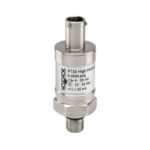 PT30-1000psig-1-13-2-2-ST8
The activity of extra discounts on wholesale prices is in full swing…
Please fill in your contact information and we will send you the latest wholesale price list.






