 ChipApex | Global Electronic Components Supplier
SEARCH
Search Product
Search Post
— IC芯片 | 连接器 | 传感器 | 被动器件 —
Search productSearch post
— IC芯片 | 连接器 | 传感器 | 被动器件 —
Consult the customer manager about the wholesale price.
consultation hotline:86-132-6715-2157
email:[email protected]
Contact the product manager for consultation. One-stop consultation is available.
Do you want a lower wholesale price? Please send us your inquiry and we will reply immediately.
The NOSHOK PT30-1000psig-1-2-1-8-ST8-CC is a pressure transmitter designed for industrial process monitoring. It features a stainless steel wetted path and an isolated diaphragm construction to ensure accurate measurement in demanding environments. The device provides a standard analog output signal corresponding to the measured pressure range of up to 1000 psig. It utilizes a robust electronic circuitry housed within a protective enclosure, suitable for integration into control systems requiring reliable pressure data acquisition.
Verify the specific process connection size and thread type required for your installation against the model suffix. Confirm the electrical output signal specification matches your controller inputs. Ensure the pressure rating exceeds the maximum operating pressure of your system. Check for any special material requirements regarding the wetted parts if handling aggressive chemicals. Review the datasheet for mounting orientation constraints and environmental protection ratings.
Select this model when a general-purpose pressure transmitter with a 1000 psig range is needed. Consider the physical dimensions and mounting style to fit the available space. Evaluate the accuracy class required for your application to ensure it meets process specifications. Compare alternative models if different output signals or connection types are necessary. Assess the environmental conditions such as temperature and vibration to confirm suitability.
This part belongs to the NOSHOK PT series of pressure transmitters, which are widely used in industrial applications. The series is known for its durability and precision in measuring liquid and gas pressures. NOSHOK products are often selected for their robust construction and ability to withstand harsh industrial environments. This specific model represents a standard configuration within that product line.
Direct replacements may include other NOSHOK models with similar pressure ranges and output signals. Cross-reference the mounting dimensions and electrical connections to ensure compatibility. Verify that the replacement unit meets the same accuracy and environmental standards. Consult official substitution guides for approved equivalent part numbers.
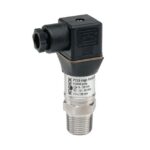 PT30-1000psig-1-2-1-8-ST8-CC
The activity of extra discounts on wholesale prices is in full swing…
Please fill in your contact information and we will send you the latest wholesale price list.






