 ChipApex | Global Electronic Components Supplier
SEARCH
Search Product
Search Post
— IC芯片 | 连接器 | 传感器 | 被动器件 —
Search productSearch post
— IC芯片 | 连接器 | 传感器 | 被动器件 —
Consult the customer manager about the wholesale price.
consultation hotline:86-132-6715-2157
email:[email protected]
Contact the product manager for consultation. One-stop consultation is available.
Do you want a lower wholesale price? Please send us your inquiry and we will reply immediately.
The NOSHOK PT30-1000psig-1-5-2-46-ST8 is a pressure transmitter designed for industrial process monitoring. It features a 1000 psig measurement range and utilizes a stainless steel wetted materials construction to ensure durability in demanding environments. The unit provides a standard 4-20 mA analog output signal, facilitating integration with PLCs and DCS systems. It employs a hermetically sealed design to protect internal components from moisture and contaminants. The device includes an integrated display option for local readout capabilities.
Verify the specific process connection size and thread type required for your installation before ordering. Confirm that the media compatibility aligns with the stainless steel wetted material specifications. Ensure the power supply voltage matches the transmitter requirements. Check if the integrated display configuration is necessary for your operational needs. Review the electrical output signal requirements against your control system inputs.
Select this model when a robust pressure measurement solution is needed for general industrial applications. The 1000 psig range suits medium-pressure hydraulic and pneumatic systems. Consider the integrated display feature if on-site visibility of pressure readings is required. Evaluate the physical dimensions and mounting options to ensure fit within the designated panel or pipe space. Compare accuracy classes if higher precision is mandated by the specific process control loop.
This component belongs to the NOSHOK PT30 series of pressure transmitters. This series is engineered for reliability in harsh industrial settings. The product line typically offers various ranges and output configurations to suit different application demands. NOSHOK products are known for their durable construction and long-term stability in continuous operation environments.
Consult official NOSHOK documentation for direct cross-reference part numbers. Verify that any substitute maintains identical pressure ranges and output signals. Ensure mechanical interface compatibility including thread types and mounting styles. Confirm that the replacement unit meets the same environmental rating standards.
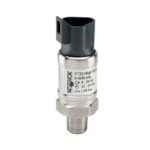 PT30-1000psig-1-5-2-46-ST8
The activity of extra discounts on wholesale prices is in full swing…
Please fill in your contact information and we will send you the latest wholesale price list.






