 ChipApex | Global Electronic Components Supplier

SEARCH
Search Product
Search Post
— IC芯片 | 连接器 | 传感器 | 被动器件 —
Search productSearch post
— IC芯片 | 连接器 | 传感器 | 被动器件 —
Consult the customer manager about the wholesale price.
consultation hotline:86-132-6715-2157
email:[email protected]
Contact the product manager for consultation. One-stop consultation is available.
Do you want a lower wholesale price? Please send us your inquiry and we will reply immediately.
The PTN5110NHQZ is a single-port USB Power Delivery (PD) TCPC PHY IC designed to implement Type-C Configuration Channel (CC) interface and USB PD Physical layer functions. It complies with USB PD, Type-C, and TCPC specifications, targeting system platforms such as notebooks, tablets, and smartphones. The device supports Sink, Source, and Dual Role Port (DRP) roles, including Provider/Consumer configurations. Key features include integrated VCONN load switch with programmable current limit, reverse leakage blocking, and over-temperature protection. It provides two enable control outputs for VBUS source/sink power paths and implements VBUS voltage monitoring, force discharge, and bleed discharge. The IC communicates via an I2C-bus interface supporting standard, fast, and fast mode plus speeds.
Verify the specific ordering suffix NHQZ corresponds to the TCPC Rev 2.0 version 1.0 configuration. Confirm that the DRP toggle starting state is set for Sink (Rd) role at power-on reset. Ensure compatibility with the required HX2QFN16 package dimensions and thermal requirements for the target PCB layout.
Select this part when a TCPC Rev 2.0 compliant PHY is required for DRP applications starting in the Sink role. It is suitable for systems needing integrated VCONN switching and robust power path control. Consider alternative suffixes like DHQZ or THQZ if fixed Sink or Source roles are preferred instead of dual-role operation.
The PTN5110 series includes variants such as PTN5110HQ, PTN5110DHQ, and PTN5110THQ, which support TCPC Rev 1.0. The PTN5110NHQZ specifically adheres to TCPC Rev 2.0. All variants share the same HX2QFN16 package but differ in default power-on reset roles and protocol compliance versions.
PTN5110HQ, PTN5110DHQ, PTN5110THQ (TCPC Rev 1.0 variants)
The PTN5110NHQZ is configured for Dual Role Port (DRP) at power-on reset, with the DRP toggle starting state set for the Sink (Rd) role.
Yes, it supports the detection of Type-C Debug accessories (Rd,Rd) and Audio accessories (Ra,Ra), indicating presence via the DBG_ACC pin and status registers.
The device supports I2C slave interface standard mode (100 kHz), Fast mode (400 kHz), and Fast mode plus (1 MHz).
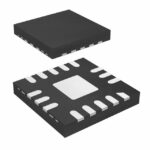 PTN5110NHQZ

The activity of extra discounts on wholesale prices is in full swing…
Please fill in your contact information and we will send you the latest wholesale price list.






