 ChipApex | Global Electronic Components Supplier
SEARCH
Search Product
Search Post
— IC芯片 | 连接器 | 传感器 | 被动器件 —
Search productSearch post
— IC芯片 | 连接器 | 传感器 | 被动器件 —
Consult the customer manager about the wholesale price.
consultation hotline:86-132-6715-2157
email:[email protected]
Contact the product manager for consultation. One-stop consultation is available.
Do you want a lower wholesale price? Please send us your inquiry and we will reply immediately.
The QT100-ISG is a single-channel digital charge-transfer touch sensor IC manufactured by Microchip Technology, housed in a 6-pin SOT23-6 package. It operates within a supply voltage range of 2.0V to 5.5V and supports an industrial temperature range of -40°C to +85°C. The device features spread-spectrum modulation (±7.5%) to reduce emissions and employs a consensus filter requiring four consecutive detections for output activation. Key electrical parameters include a typical response time of 100ms, a maximum on-duration of 80 seconds, and a threshold differential of 10 counts with 2-count hysteresis. Supply current varies from 9µA in Low Power mode to 600µA in Fast mode at 3V.
Verify component authenticity against official Microchip documentation. Confirm the specific revision level matches design requirements. Ensure proper handling procedures are followed due to electrostatic sensitivity. Check for RoHS compliance status relevant to the manufacturing date. Validate that the SOT23-6 package dimensions align with the target PCB footprint.
Evaluate the required panel thickness and material dielectric constant to determine the appropriate sample capacitor value. Consider the trade-off between response time and power consumption when selecting between Fast and Low Power modes. Ensure adequate bypass capacitance is placed near the VDD and VSS pins to prevent latch-up during transients. Verify that the electrode trace routing minimizes stray capacitance to maintain optimal gain.
The QT100 belongs to the QTouch family of capacitive touch sensors utilizing charge-transfer technology. It serves as a foundational component for simple human-machine interfaces where reliability and low cost are prioritized. The ISG suffix denotes the industrial temperature grade variant suitable for broader environmental operating conditions compared to commercial grades.
Direct functional substitutes may include other single-channel charge-transfer sensors from the same manufacturer family. Verify compatibility regarding package outline, pin configuration, and operating voltage ranges before substitution. Review datasheet differences for changes in threshold levels, response times, and output drive capabilities.
The device uses asymmetric drift compensation that tracks the raw signal slowly when no detection is active. It compensates faster for decreasing signals than increasing ones to prevent false negatives while avoiding ignoring approaching fingers.
The HeartBeat™ feature places the output pin into a three-state mode for 15µs before every measurement burst. This allows a microcontroller or monitoring circuit to verify that the sensor is functioning correctly.
Yes, by applying a waveform to the SYNC/MODE pin, multiple QT100 devices can be synchronized to prevent cross-interference or to enhance immunity to low-frequency noise sources like mains signals.
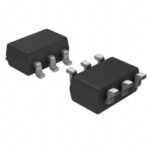 QT100-ISG
The activity of extra discounts on wholesale prices is in full swing…
Please fill in your contact information and we will send you the latest wholesale price list.





