 ChipApex | Global Electronic Components Supplier
SEARCH
Search Product
Search Post
— IC芯片 | 连接器 | 传感器 | 被动器件 —
Search productSearch post
— IC芯片 | 连接器 | 传感器 | 被动器件 —
Consult the customer manager about the wholesale price.
consultation hotline:86-132-6715-2157
email:[email protected]
Contact the product manager for consultation. One-stop consultation is available.
Do you want a lower wholesale price? Please send us your inquiry and we will reply immediately.
The QT161-D is a 6-channel digital charge-transfer capacitive touch sensor IC from the QProx family. It detects near-proximity or touch via up to six independent electrodes, projecting fields through dielectrics like glass, plastic, stone, ceramic, and wood. The device operates on a single supply voltage ranging from 3V to 5.5V with a maximum current consumption of 5mA. It features a 14-bit switched capacitor ADC for signal processing and includes built-in drift compensation and detection integrators to ensure stability against environmental noise. The component supports DC and toggle output modes and is available in an industrial temperature range of 0°C to +70°C.
Verify the specific suffix 'D' confirms the commercial temperature range (0°C to +70°C) rather than the extended industrial range (-40°C to +105°C). Confirm package availability matches the required footprint, as DIP and SSOP pinouts differ significantly. Ensure ordering documentation specifies the correct variant to avoid functional mismatches related to temperature ratings.
Select this component when designing human-machine interfaces requiring robust touch sensing without complex microcontroller integration. The QT161-D is suitable for applications needing simple logic outputs and high immunity to RF interference. Designers must account for the requirement of one external sampling capacitor per channel and ensure proper grounding strategies are implemented to complete the capacitive field loop effectively.
The QT161-D belongs to the QProx QT160/QT161 series of self-contained digital controllers. Unlike the QT160, the QT161 does not include Adjacent Key Suppression (AKS), making it appropriate for layouts where keys are sufficiently spaced. The device utilizes Quantum's proprietary charge-transfer technology to deliver performance superior to older resistive or capacitive technologies while maintaining low cost and simplicity.
Direct replacements within the same family include the QT160-D, which offers identical electrical characteristics but adds Adjacent Key Suppression functionality. Designers should verify that the additional AKS feature does not interfere with existing key logic if substituting the QT160 for the QT161.
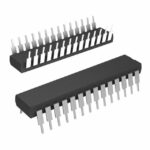 QT161-D
The activity of extra discounts on wholesale prices is in full swing…
Please fill in your contact information and we will send you the latest wholesale price list.





